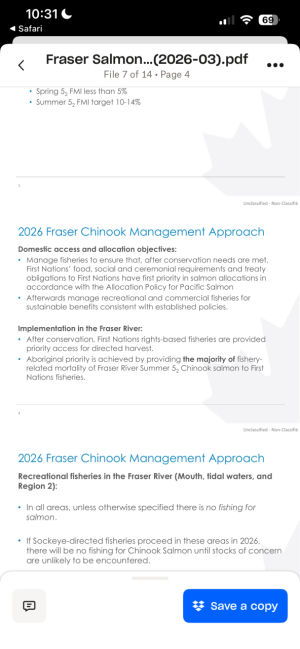
Based on DFO's data. If we allocate these fish based on fair shares, using a couple of simple economic (real GDP and household income) and social (fisher participation and direct employment) factors. The rec sector should be provided with 97% of the share based on GDP ($424M total, rec share = $412M), 97% based on household income ($284M total, rec share = $$276M), 99% based on fisher participation (~ 220,000 anglers vs 881 commercial fishers), and 83% based on direct employment (5,061 total, 4,180 of those being rec based). 881 commercial jobs include many that don't actively fish for salmon, let alone for Chinook and/or coho, so this share would certainly go up if we removed those non-Chinook/coho related salmon fishers. Additionally, there are other data sources that suggest there are roughly 9,000 recreational fishery jobs, so again, a further increase in the recreational share. If we usean average of 2.5 fishers per troll boat (the major Chinook and coho producers) there are 103 and 36 active trollers on the North coast and WCVI fisheries, a total of 139 trollers, or roughly 348 fishers. So if we use 9,000 rec jobs and 350 commercial jobs, then the rec sector should be allocated 96% of the fair share.
Seems pretty clear cut. Fair share should be the way to go... if they want it that way.
Food security claims are comical. The average BC household in 2021 spent $245 on fish and seafood products. Fresh or frozen fish comprise $112 of those expenditures and Chinook or coho would be purchased in this form. Fresh Chinook and coho typically cost $25 to $50/lbs. So we are talking about 2 to 4.5 lbs of protein per household. Not exactly food security.
This is a simple decision for Ottawa to make. Clear benefits from one fishery relative to the others... but we all know how simple decisions go these days...