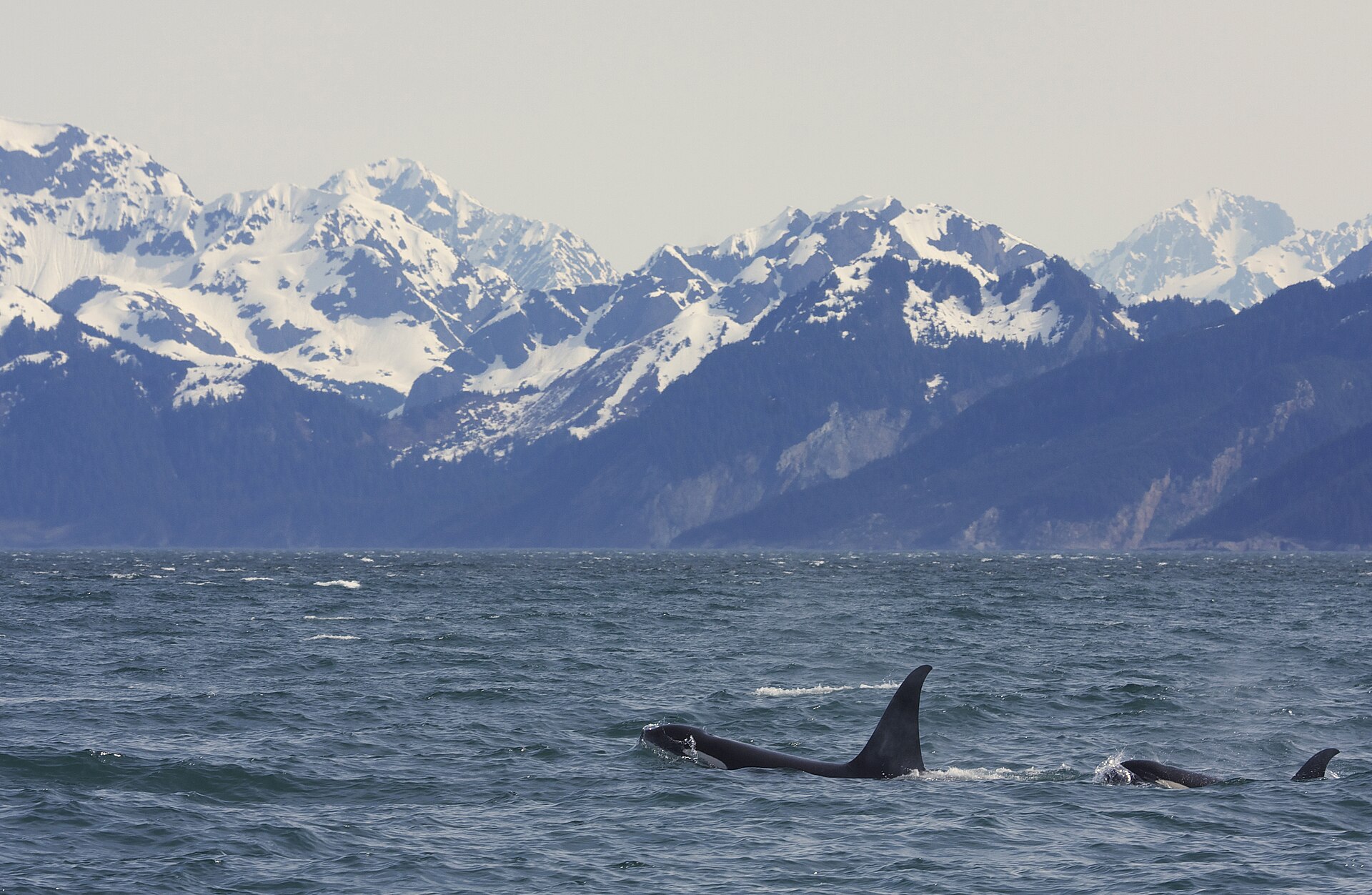
Genetically speaking there's ~350,000 - 700,000 years of divergence between Bigg's and resident/fish eaters, with the North Pacific residents being more closely related to Atlantic fish eaters than they are to the Bigg's that they share the same waters with.
Deeper dive on killer whale genetics here:
https://royalsocietypublishing.org/...ised-taxonomy-of-eastern-North-Pacific-killer
There's far less information telling the difference between the mammal-eating populations in the North Pacific which is why these "new" animals, with their presumed origins from a different mammal-eating population than the west coast Bigg's (presumed origin based on the presence of CC bites), mixing it up with known west coast Bigg's is particularly interesting.
There's much we do not know and there's always more to learn. Sounds like we're on the same page! Speaking of pages, here are links to catalogues of some of the various mammal eaters in the Eastern North Pacific.
Catalogue of Gulf of AK Ts (some CC bites):
https://www.whalesalaska.org/_files/ugd/d07eba_7329bc107ad24bc4bcce66e42e56c882.pdf
Catalogue of West Coast Ts (no CC bites):
https://www.researchgate.net/publication/398258949_Photo-identification_Catalogue_and_Status_of_the_Coastal_Subset_of_the_West_Coast_Transient_Population_of_Bigg's_Killer_Whale_in_British_Columbia_Canada
Catalogue of Outer Coast Ts (the OCX group has CC bites):
https://repository.library.noaa.gov/view/noaa/30740
Edit: we know from captive animals that the various ecotypes can interbreed and produce viable offspring.



 those are the most free creatures this world has to offer.