

You are using an out of date browser. It may not display this or other websites correctly.
You should upgrade or use an alternative browser.
You should upgrade or use an alternative browser.
Maintain Priority Access to Chinook and Coho for the Canadian Public in a New Salmon Allocation Policy. Send Your Letter to DFO!
- Thread starter cohochinook
- Start date
Esperanza-time
Member
So when will the good ole Libs drop the hammer on sportys?
The usual April fools day special?
The usual April fools day special?

ryanonthevedder
Well-Known Member
I grew up fishing spring on the Fraser. Weekends on the gravel bars keeping an ear out for that tell tale bell.
Once it was lost it never came back.
Once it was lost it never came back.

Sttr
Crew Member
Mike Smyth on CKNW had a great interview with Jesse Zemen from BCWF today, they talked about how important recreational fishing is for our economy, explained the importance of keeping salmon common property for Canadians, explained how we will lose our fishing opportunities if this goes thru, Mike let Jesse answer back on Gord Johns comments on how nobody is trying to take away fishing from the public, he did a great job clarifying that Gord is wrong. Mike also acknowledged this is gaining a lot of steam with town halls packed and big push back from the public.
Jesse is very well spoken and sticks to the important details. He was great at Town Hall in Duncan.Mike Smyth on CKNW had a great interview with Jesse Zemen from BCWF today, they talked about how important recreational fishing is for our economy, explained the importance of keeping salmon common property for Canadians, explained how we will lose our fishing opportunities if this goes thru, Mike let Jesse answer back on Gord Johns comments on how nobody is trying to take away fishing from the public, he did a great job clarifying that Gord is wrong. Mike also acknowledged this is gaining a lot of steam with town halls packed and big push back from the public.
His message is very focused which is what we need. He is the kind of guy we need representing us and explaining the issue to Sports Fishermen and the public. Thanks Jesse!

Ryan A
Well-Known Member
Segment starts at the 35min mark in the 11AM time slot on the 13th https://globalnews.ca/pages/audio-vault-cknw/Mike Smyth on CKNW had a great interview with Jesse Zemen from BCWF today

G Gordon
Crew Member
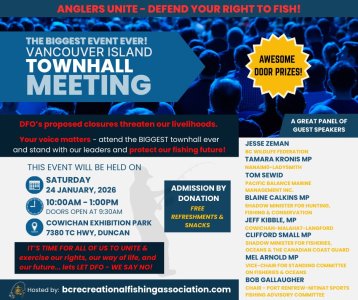
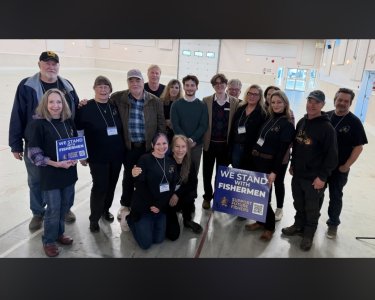
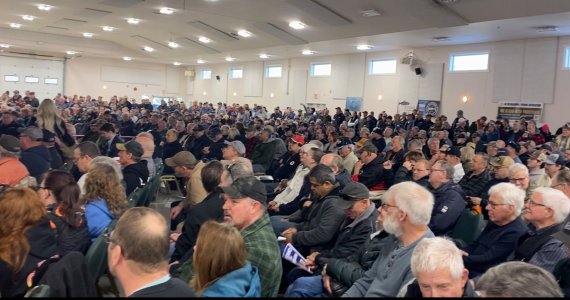
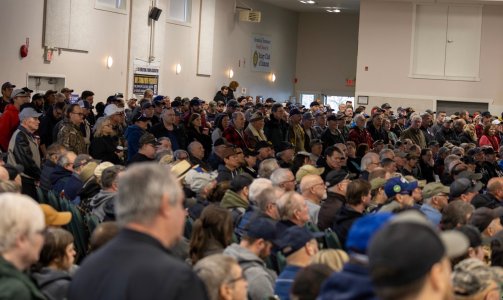
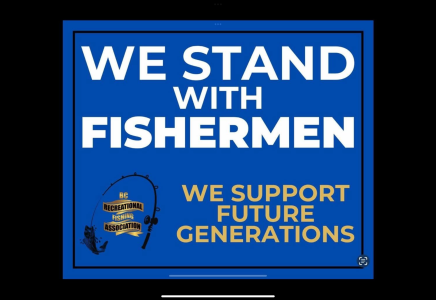
These photos say it all.
Over 2,100 anglers, families, businesses, and fishing organizations came together at Mellor Hall the largest fishing event ever held on the West Coast.
Different communities. One voice.
For our fishery. For our future. For our way of life.

#BCRFA #FishingCommunities #BCFishing
#RecreationalFishing #CoastalCommunities
#UnitedWeStand #OurWayOfLife
BC Wildlife Federation Island Fisherman Magazine Blue Fish Canada Thomas Sewid Len Thompson Lures Island Outfitters Silver Streak Boats Parksville Boathouse Ltd.
A special thank you to Jeff Audette for capturing the energy, unity, and powerful moments from the BCRFA Town Hall. These images tell the story
of our community coming together.
 Photo Credit: Jeff Audette
Over 2,100 anglers, families, businesses, and fishing organizations came together at Mellor Hall the largest fishing event ever held on the West Coast.
Different communities. One voice.
For our fishery. For our future. For our way of life.
#BCRFA #FishingCommunities #BCFishing
#RecreationalFishing #CoastalCommunities
#UnitedWeStand #OurWayOfLife
BC Wildlife Federation Island Fisherman Magazine Blue Fish Canada Thomas Sewid Len Thompson Lures Island Outfitters Silver Streak Boats Parksville Boathouse Ltd.
A special thank you to Jeff Audette for capturing the energy, unity, and powerful moments from the BCRFA Town Hall. These images tell the story
of our community coming together.
Photo Credit: Jeff AudetteAttachments
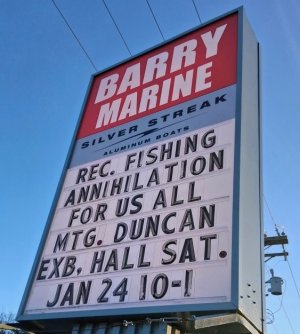
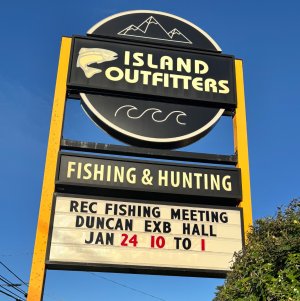
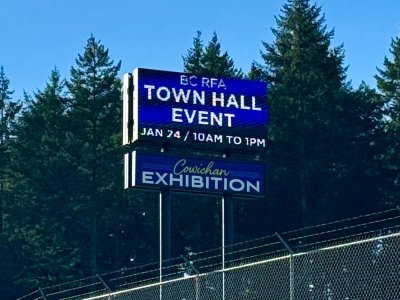
G Gordon
Crew Member
 LETTER CAMPAIGN UNDERWAY
 Over 2,100 strong at our Town Hall — now let’s carry that momentum to Ottawa.
We are asking every angler, every family, every business owner:
Send your letter to Minister Joanne Thompson.
Demand protection of public priority access.
 minister@dfo-mpo.gc.ca joanne.thompson@parl.gc.ca
Share your story, post your letter.
Tag your fishing partners.
Let’s flood their inbox respectfully and professionally.
Strong voices. United communities.
#BCRFA #StandUpForOurFishery #RecreationalFishing #FishingCommunities
Attachments

SpringVelocity
Crew Member
Based on yesterday's announcement by province I suggest people really start pushing your MLA about this issue.
NDP is on very shaky ground right now. Very vulnerable at this point.
What a mess !
NDP is on very shaky ground right now. Very vulnerable at this point.
What a mess !

cohochinook
Well-Known Member
This was just posted by DFO:
 www.pac.dfo-mpo.gc.ca
I would say this line is very concerning in the release. A change to common property has significant implications for our salmon fishery.
“The presence or absence of a reference to “Common Property” in the SAP will not change the legal authorities that guide the management of fisheries.”
It's time for everyone who cares about this issue to reach out to their Member of Parliament to let them know their concerns with the review of the Salmon Allocation Policy. The Fishing Rights web page is a good resource https://www.fishingrights.ca/. Here is how you can find your MP's contact information to call or write them https://www.ourcommons.ca/Members/en/search
Pacific Salmon Allocation Policy review | Pacific Region | Fisheries and Oceans Canada
Pacific Salmon Allocation Policy review | Pacific Region | Fisheries and Oceans Canada
I would say this line is very concerning in the release. A change to common property has significant implications for our salmon fishery.
“The presence or absence of a reference to “Common Property” in the SAP will not change the legal authorities that guide the management of fisheries.”
It's time for everyone who cares about this issue to reach out to their Member of Parliament to let them know their concerns with the review of the Salmon Allocation Policy. The Fishing Rights web page is a good resource https://www.fishingrights.ca/. Here is how you can find your MP's contact information to call or write them https://www.ourcommons.ca/Members/en/search
SpringVelocity
Crew Member
"A revised SAP will not extinguish any sector’s access to the resource."
LOLOLOLOLOLOLOL
LOLOLOLOLOLOLOL
SpringVelocity
Crew Member
What is the Pacific Salmon Allocation Policy?
Released in 1999, the Pacific Salmon Allocation Policy (SAP) outlines a series of principles to guide the allocation of allowable Pacific salmon catch among First Nations as well as commercial and recreational fisheries. The policy does not define specific allocations for individual fisheries.
What is the policy review and who has been consulted?
The policy review is a collaborative process that brings together First Nations, commercial, and recreational fishing sectors to discuss potential changes and updates to the SAP. If you have questions or wish to better understand the review, we invite you to learn more by reading the 2025 discussion paper.
Why is the SAP being reviewed?
Many things have changed since the SAP was introduced in 1999, including new conservation requirements for stocks of concern, changes to the way we manage fisheries, and new treaties and reconciliation agreements with First Nations. The revised policy will provide greater clarity and is intended to align with current approaches to salmon management in B.C.
Additionally, First Nations have fishing rights that are recognized and protected under Section 35 of the Constitution Act, and have been further defined in court decisions. The 2018 B.C. Supreme Court Ahousaht decision found the application of the 1999 Policy to be an unjustified infringement of five Nuu-chah-nulth Nations’ (Ahousaht, Ehattesaht, Hesquiaht, Mowachaht/Muchalaht, and Tla-o-qui-aht, or “the Five Nations”) Aboriginal rights to fish and sell fish, including Chinook and coho.
What changes are being considered?
While we responded to the Ahousaht decision through the development of a Fisheries Management Plan for the Five Nations, the SAP must also be updated to reflect the priority of the Five Nations’ right-based sale fishery to address court-identified infringements, particularly for Chinook and coho salmon.
All parties involved – including commercial and recreational fishery sector representatives, and First Nations – accept and respect the higher priority of right-based fisheries. This includes food, social and ceremonial fisheries; fisheries implementing historic and treaty rights; and right-based commercial fisheries.
Other topics considered include:
- The relative priority of current and future recognized First Nation right-based commercial fisheries
- The relative priority and allocations between recreational and commercial harvesters
- Principles for priority, management, and allocation of fish caught as by-catch
- The priority of fish required to provide scientific information necessary for conservation (e.g., test fisheries)
What will not change
Pacific salmon will remain a shared public resource managed by the Government of Canada on behalf of all Canadians based on the Minister of Fisheries’ authorities granted under the Fisheries Act and associated regulations. The presence or absence of a reference to “Common Property” in the SAP will not change the legal authorities that guide the management of fisheries.
A revised SAP will not extinguish any sector’s access to the resource.
It is expected that the updated policy will continue to reflect the following:
- Conservation and sustainable management will remain the highest priority, consistent with the Wild Salmon Policy and the Sustainable Fisheries Framework
- After conservation, the principles will reflect the priority for First Nations right-based fisheries
- Recreational and commercial fishery access will continue to be provided, consistent with allocation priorities and under the authority of licences granted under the Fisheries Act
What's happening now?
On December 1, 2025, we circulated a discussion paper for comment to First Nations in B.C., the Sport Fishing Advisory Board, and the Commercial Salmon Advisory Board. The discussion paper shares information about the 1999 SAP, the reasons that it needs to be updated, and the consultation and engagement steps taken so far. It is not a draft revised policy, but rather outlines the key principles and input received to date through the consultative process. This input, combined with feedback from the public consultation process, will inform upcoming decisions on changes to the SAP. The deadline for feedback was January 23, 2026.
The First Nations-DFO Committee and Multi-Party Working Group will continue to review all feedback received during the consultation period and seek to develop options and joint recommendations for the Minister’s consideration.
wildmanyeah
Crew Member
More gaslighting
A revised SAP will not extinguish any sector’s access to the resource.
Can you elaborate on what the access will actually look like? No because we have zero idea
Just trust me bro
A revised SAP will not extinguish any sector’s access to the resource.
Can you elaborate on what the access will actually look like? No because we have zero idea
Just trust me bro
Last edited:
wildmanyeah
Crew Member
Notice how it’s not called FSC anymore it’s
“First Nations right-based fisheries”
Because it includes commercial
“First Nations right-based fisheries”
Because it includes commercial
SpringVelocity
Crew Member
It feels a bit weird. Going back and rewording your process after you have your feedback already. Especially after the deadline has passed.
It feels a bit defensive on DFO's part. Even the wording is a bit of a red flag.
It feels a bit defensive on DFO's part. Even the wording is a bit of a red flag.
ryanonthevedder
Well-Known Member
They're not trying to extinguish public access."A revised SAP will not extinguish any sector’s access to the resource."
LOLOLOLOLOLOLOL
Just severely restrict it.
The Fraser Chinook fishery wasn't extinguished either... but when they were abundant in 2023 there was no opening... but it's not closed forever I'm told... just mostly is what I've observed.
cohochinook
Well-Known Member
I have substantial concerns that the government is going to push forward with a reallocation of the sport catch priority under the Salmon Allocation Policy for Chinook and Coho — reallocating it to commercial interests, which are being heavily lobbied by certain First Nations. It’s my understanding that they hold over 40% of the commercial licenses.
The same bureaucrats who were working under Trudeau — who brought in massive Chinook closures and southern resident killer whale measures— that are still advising the Minister and the department.
When you look at who initiated this review, it was Dominic LeBlanc. He remains very senior within the Carney government. That’s part of the reason I took five days off work and travelled to Ottawa with the Public Fishery Alliance. I don’t work in the industry at all — this was volunteer time away from my work.
What I see potentially happening is very limited openings for Chinook and Coho — for example, something like a 7-day season, similar to what you see in parts of Washington State. That’s a scary prospect and would have a major impact on people like you and me who fish recreationally. Lodges and businesses wouldn’t be able to plan their seasons with any predictability. Tackle shops wouldn’t know what to order. And we would lose volunteers who currently contribute what amounts to roughly $25 million annually in value to the government.
The only thing that will stop this is a massive public outcry over the next six weeks. Everyone needs to call and write their MP. People need to attend town halls. The Conservative MPs we met with were far more knowledgeable on the issue. I was hopeful there would be a change in direction under the Carney government, but after my trip to Ottawa, I don’t feel that at all. The majority of BC Liberal MPs do not understand how significant the proposed SAP changes could be economically, socially, and in terms of volunteer contributions. They need to be held accountable and feel the pressure.
In my view, this is the biggest issue to face the BC coast in the history of salmon fishing. Too many people are complacent. Complaining on a fish forum won’t change anything. Everyone needs to engage as much as possible. This is the last stand for Chinook and Coho access — because once it’s changed, there’s no going back.
The same bureaucrats who were working under Trudeau — who brought in massive Chinook closures and southern resident killer whale measures— that are still advising the Minister and the department.
When you look at who initiated this review, it was Dominic LeBlanc. He remains very senior within the Carney government. That’s part of the reason I took five days off work and travelled to Ottawa with the Public Fishery Alliance. I don’t work in the industry at all — this was volunteer time away from my work.
What I see potentially happening is very limited openings for Chinook and Coho — for example, something like a 7-day season, similar to what you see in parts of Washington State. That’s a scary prospect and would have a major impact on people like you and me who fish recreationally. Lodges and businesses wouldn’t be able to plan their seasons with any predictability. Tackle shops wouldn’t know what to order. And we would lose volunteers who currently contribute what amounts to roughly $25 million annually in value to the government.
The only thing that will stop this is a massive public outcry over the next six weeks. Everyone needs to call and write their MP. People need to attend town halls. The Conservative MPs we met with were far more knowledgeable on the issue. I was hopeful there would be a change in direction under the Carney government, but after my trip to Ottawa, I don’t feel that at all. The majority of BC Liberal MPs do not understand how significant the proposed SAP changes could be economically, socially, and in terms of volunteer contributions. They need to be held accountable and feel the pressure.
In my view, this is the biggest issue to face the BC coast in the history of salmon fishing. Too many people are complacent. Complaining on a fish forum won’t change anything. Everyone needs to engage as much as possible. This is the last stand for Chinook and Coho access — because once it’s changed, there’s no going back.
Last edited:
Similar threads

- Replies
- 1
- Views
- 358
- Replies
- 18
- Views
- 2K

- Replies
- 1
- Views
- 234

- Replies
- 11
- Views
- 1K
