Trudeau promises more gun control and goes on the attack against Scheer

Didn't take long for Global to put their spin on this tragedy...

Mass shootings have prompted Canadian gun laws to change over the decades​

Mass shootings in Canada — including an April 2020 rampage in Nova Scotia — have spurred changes to gun laws in recent decades.

Few details were available Wednesday on the type of firearm used in Tuesday’s mass shootings in Tumbler Ridge, B.C., which left nine people dead, including the suspect, and many others injured.

RCMP Deputy Commissioner Dwayne McDonald said two firearms — a long gun and a modified handgun — were recovered by responding officers.

“Determining the origin of these firearms and what role they played in the shootings remains a significant part of the active and ongoing investigation,” McDonald told reporters in Surrey, B.C.

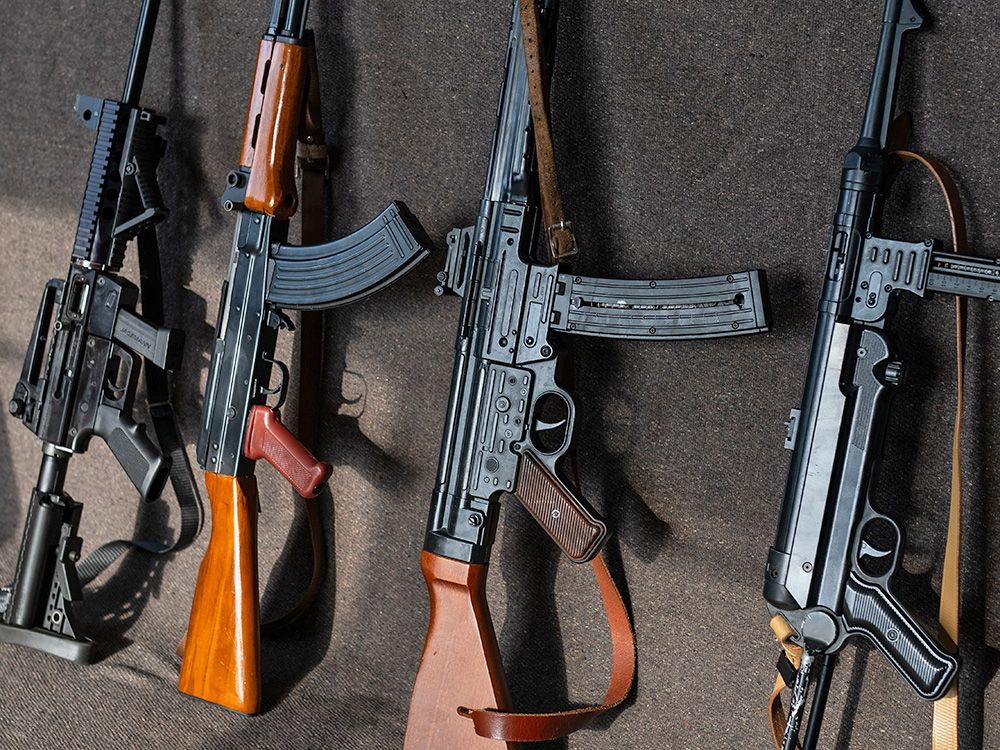
Since May 2020, the federal Liberals have outlawed about 2,500 types of firearms, including the AR-15 and Ruger Mini-14, on the basis they belong only on the battlefield.

Prohibited firearms and devices must be disposed of — or deactivated — by the end of an amnesty period on Oct. 30.

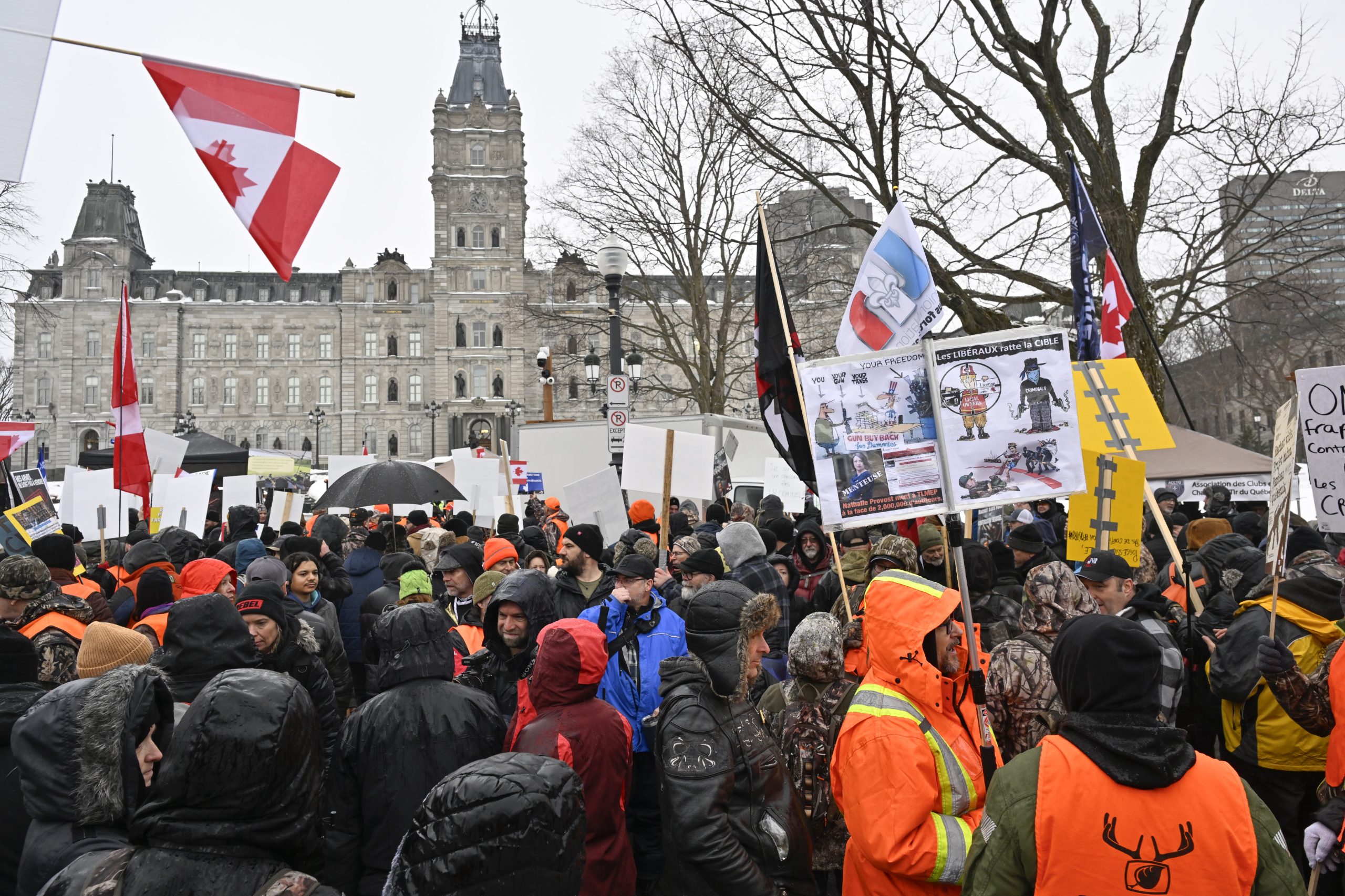
Firearms rights advocates and the federal Conservatives have accused the government of targeting law-abiding gun owners and have denounced the program as a poor use of taxpayer dollars.

Gun-control advocates have applauded the compensation program while criticizing the government for not banning new sales of the semi-automatic SKS rifle.

The SKS is commonly used in Indigenous communities to hunt for food. It also has been used in police killings and other high-profile shootings in recent years.

The government is carrying out a broad review of Canada’s firearms classification regime that will include consultations with Indigenous communities on the SKS.

The Liberals also have taken steps to restrict handguns, increase penalties for firearms trafficking, keep firearms out of the hands of domestic abusers and curb homemade ghost guns.

In 1989, a gunman armed with a Ruger Mini-14 and a hunting knife murdered 14 women at Montreal’s École Polytechnique.

In the early 1990s, federal legislation toughened penalties for gun-related crimes and ushered in new measures on acquiring and storing firearms.

The Liberal government of Jean Chrétien created a universal registry for firearms, including ordinary rifles and shotguns, in the mid-1990s.

The registry was lambasted by critics as a needless intrusion into the lives of farmers, hunters and sport shooters, and touted by others as a worthy tool for police who used it to glean crucial information.

Stephen Harper’s Conservatives introduced legislation to scrap universal registration, ending the requirement to register non-restricted firearms.


RCMP incompetence put 2.2 million Canadian gun owners in harm’s way and the Liberal government hid it​

When the RCMP and Bill Blair hid a massive firearms registry leak from 2.2 million Canadians, they didn't just fail at IT—they handed organized crime a shopping list for your front door.

The Royal Canadian Mounted Police have proven themselves incompetent and untrustworthy before, but never at this scale.

In 2021, the RCMP presided over a massive data breach.

More than 2.2 million licenced firearms owners were affected.

Names. Addresses. Contact details. Licencing records.

A veritable Christmas wish list for criminals, and everyone responsible for it stayed quiet.

This was not a minor IT mishap. It was a catastrophic failure of basic data stewardship.

The RCMP outsourced core functions of the Canadian Firearms Program to an unidentified third party. That vendor was hit with a ransomware attack.

The RCMP insisted that, while there “was no indication that any personal information was viewed or extracted, it is not possible to confirm that it was not accessed.”

Read that again.

“It is not possible to confirm,” yet the RCMP chose to give themselves a full pass instead of holding themselves accountable.

Again, those who follow such things know this is nothing new. It’s long and well-documented that this is exactly how the RCMP operates.

Protect the institution.

Blame everyone except themselves.

While Canadians slept, while the RCMP downplayed the risk to their political masters, and while Public Safety Minister Bill Blair hid the data breach from licenced gun owners. Organized criminals had a target-rich list to choose which guns they would steal and from whom.

The breach occurred in March 2021, but the RCMP reported it only months later. During this time, the Minister of Public Safety deliberately withheld information from the public.

No warning. No disclosure. No urgent guidance for the millions of people and their families placed at risk by the RCMP’s incompetence and Minister Bill Blair’s cover-up.

Bill Blair’s decision to hide the RCMP data breach exposed families to burglary, intimidation, and theft.

Every break and enter of a licenced gun owner can arguably be placed at the feet of the RCMP and then-Minister of Public Safety Bill Blair.

As the former Chief of the Toronto Police Service, Bill Blair understood exactly what a mass exposure of firearms owner data meant.

Yet, in longstanding Bill Blair fashion, he chose to protect his career instead of doing his job: protecting the lives and property of 2.2 million licenced Canadian gun owners.

It was more important to insulate himself and Justin Trudeau’s Liberal government than to issue a valid and urgent public warning.

That’s not leadership. That’s criminal negligence.

When you are uncertain, it is important to inform those who might be affected. In situations where millions are at risk, it is crucial to respond with urgency. Additionally, when mistakes occur, it is essential to be honest and transparent about the truth.

That’s the opposite of what happened.

The Liberal government intentionally hid the scale of the data breach for years. The vendor was never named, oversight was always deflected, and accountability never entered the process.

Lawful firearms owners did everything required of them. In return, the Canadian government failed its most basic duty: to protect the data it demands from the people it regulates.

This is why trust within the RCMP and this Liberal government is broken.

Public safety is not a press release. It is a responsibility.

In 2021, that responsibility was abandoned by the RCMP and the Liberal federal government.

The RCMP must be held accountable for operational incompetence.

The Liberal government must answer for its deliberate lack of transparency, which put 2.2 million Canadians in harm’s way.

And Parliament must demand independent oversight, mandatory data breach notification, and consequences for officials who choose silence over public safety.

 
So one month into the so called compensation program, the feds finally let out the new numbers. Despite their best efforts, there have only been an additional 10 K registrations over week 1 in the three weeks that followed (total to date 32 K). Their stated goal was 136 K. It very much is starting to appear they won't even come close to 50 % of that. Program FAIL.

Breakdown by Province is here: https://www.canada.ca/en/public-saf...ber-firearms-declared-province-territory.html
 

Nunavut gov’t says no police resources will be used on federal gun buyback program​

All 3 territories have expressed opposition to the program​

The Nunavut government says it will not be using police resources on the federal gun buyback program, and solutions proposed by Ottawa do not apply to the territory.

More than 2,500 types of so-called "assault-style" weapons have been illegal in Canada since 2020. The federal government has an amnesty order in place for the guns and is offering to buy them back from businesses and individual owners.

Andrew Blackadar, Nunavut’s assistant deputy minister for public safety, believes the administration of that program could be a strain on police – especially given the remoteness of Nunavut’s communities.

“We don't want to divert policing resources towards this and take them away from the much more important public safety needs that we have here in the territory,” he said.

In 2023, there were 140 officers across Nunavut’s 25 police detachments according to Nunavut’s Bureau of Statistics, though staffing levels vary and some smaller communities have very few officers assigned.

In a statement to CBC News, Public Safety Canada says the program will not compromise frontline police work.

“The RCMP is being funded to collect firearms separate from their contract policing activities in provinces and territories,” the department said, adding it will bring in supplementary resources, such as police reservists and public servants.

But Nunavut’s justice department says all police resources – including reservists and public servants – are funded through the territorial police service agreement.

“The position of the Government of Nunavut is that territorial policing resources will not be used to collect these firearms,” it wrote in a statement.

Blackadar is proposing the federal government bring in a third party contractor to do that work.

Turn it in or have it deactivated

Gun owners who possess banned firearms can make declarations to the federal government until the end of March. The amnesty period ends on Oct. 30, after which point it will be illegal to possess the banned firearms.

Public Safety Canada says there are two options for people with banned firearms: turn it in or have it permanently deactivated. Firearms in Nunavut will be collected by the RCMP, or they can be shipped for deactivation. The department says instructions on that process will be provided after the national declaration period ends on March 31.

But Nunavut’s justice department says Ottawa has not shared that plan with them – and the territorial government has not received communications about the program since the summer. Nunavut RCMP’s Sgt. George Henrie says he currently doesn’t have enough information on the program to comment.

All three territories have now expressed concerns with the program. The N.W.T. government says the territory’s RCMP will not be involved in the program. The Yukon government also says it won't participate in the program, though it's unclear what that means for gun owners in the territory.

Ottawa has argued the program is focused on firearms designed for warfare, and not for hunting or sport shooting.

Public Safety Canada says there are 124 assault-style firearms in Nunavut, meaning the program would affect just a fraction of the territory’s population.

 
"Ottawa has argued the program is focused on firearms designed for warfare, and not for hunting or sport shooting."

Like Ruger No.1 chamber in 22 hornet, among others?
 
Already starting the excuses for a failed program...

Delays over federal gun 'buyback' program contributed to 'diminished' support, minister says​

‘The pilot numbers were not as robust as we had expected,’ Gary Anandasangaree said, adding he believed Canadians would nonetheless still take part in the program

OTTAWA — Canada’s public safety minister says he believes the federal government’s delays in launching its compensation program for banned firearms has partly contributed to the drop in support among police across jurisdictions and sowed confusion among Canadians.

“There’s been a lot of misunderstandings about the program,” Gary Anandasangaree told National Post in a wide-ranging interview on Wednesday.

“Our resolve is to make sure that this program is completed in a timely manner.”

Firearms owners with one of the more than 2,500 makes and models of guns that the federal Liberal government has banned since 2020 have until the end of March to signal their willingness to participate in the federal compensation program, which was launched back in January.

So far, Public Safety Canada, the department responsible for administering the program, has reported that it has received declarations for more than 32,000 firearms, as of Feb.20.

The federal government has earmarked spending $250 million to compensate firearms owners who choose to turn over their weapons in exchange for payment, with money expected to cover up to 136,000 guns.

Anandasangaree has been urging affected gun owners to submit their declarations early should they want a chance at compensation, saying money would be doled out on a first-come-first-service basis and that submitting a declaration does not guarantee payment.

The minister suggested that as people realize the government may not have the resources to provide everyone with compensation, “they may be more inclined to enroll.” He added that he was “quite satisfied” at the progress to date.

Prominent gun advocacy groups and their lobbyists have urged Prime Minister Mark Carney to reverse course on the policy, which was first promised during the 2019 federal election campaign under his predecessor, former prime minister Justin Trudeau.

Some 1,500 models and their variants were first banned in May 2020, such as the AR-15, following the mass shooting a gunman carried out in rural Nova Scotia. Since then, hundreds more makes and models of firearms it has deemed as too dangerous for public use have been added to the list.

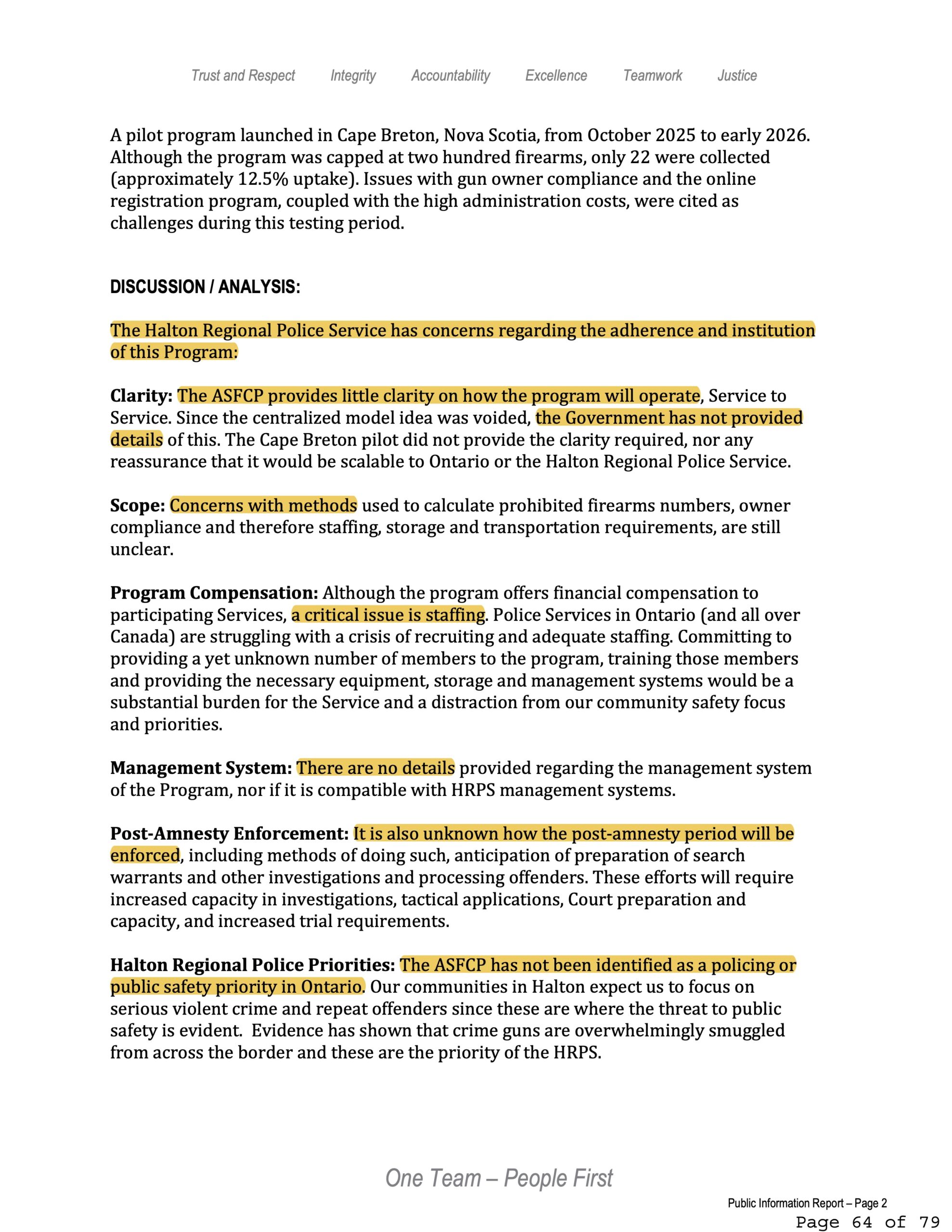
Firearms groups also point the to results from a pilot that was run in parts of Cape Breton last year that only amounted to 25 guns being handed out by some 16 individuals, when officials announced it could have received upwards of 200.

“The pilot numbers were not as robust as we had expected,” Anandasangaree said, adding he believed Canadians would nonetheless still take part in the program.

“As we get closer to the deadline, and as people look at rightfully getting compensation for a firearm that they can no longer use, we’ll be registering in higher numbers.”

Regardless of whether impacted firearms owners choose to register their weapon in the hopes of receiving compensation, the federal government has set a deadline of October 2026 for when they must hand their banned firearms over to police or make them inoperable them through deactivation.

That date is when an amnesty period shielding owners of these banned firearms from any liability is set to expire— and is a date that Anandasangaree told National Post the government is not open to extending.

“This has been litigated for about five years,” the minister said, adding it has been the subject of many delays.

Asked whether he believes the government’s delays have impacted its success, the minister suggested it has caused some Canadians to question the program.

“I think people may have been skeptical that whether we’re going ahead with it because of the number of extensions … or the delay in implementing the program.”

Since its official launch, a majority of provinces and territories have publicly indicated they have no plans to participate, with different premiers saying they do not believe targeting lawful gun owners to be the correct policy from the federal government.

Anandasangaree said he believed there was initially buy-in, which has dropped over time.

“I think over time, it diminished, in part, perhaps because it was delayed for so long,” the minister said.

“But ultimately, I will say, notwithstanding their position with respect to the program, they have an obligation. Each police of jurisdiction has an obligation on October 31 to ensure that they enforce law.”

Many municipal police services, including those across Ontario, have rejected taking part.

He reiterated that the federal government has designed the program in such a way that it will be able to collect firearms declared under the compensation program by deploying mobile collection units, which he suggested would happen sometime this spring.

Officials also plan to look to the RCMP. Anandasangaree also reiterated the federal government would not look to pull from existing police resources to carry out collection efforts, but rely on individuals who may be retired or were off-duty.

The minister confirmed issues regarding Saskatchewan and Alberta, which have each taken legislative steps to effectively block the policy, remain unresolved.

Without a resolution, he said firearms owners who have registered to take part in the compensation program will be out of luck.

The Public Safety department reports that as of Feb.20, some 2,700 firearms had been declared in Alberta, as compared to some 450 in Saskatchewan.

Anandasangaree said officials were looking to see whether any exemptions could be provided so gun owners could received compensation.

“They’re essentially disenfranchising law-abiding firearm owners in Alberta and Saskatchewan, who are entitled to compensation from the federal government.”

When it comes to other provinces, the federal government reports that around 13,000 firearms have been declared in Ontario and around 7,300 in British Columbia.

Asked whether he has any regrets about the controversial program, the minister pointed to previous statements that he would have designed it differently from the outset and launched it earlier.

“It’s caused some confusion for Canadians,” he said.

 
A political win beats protecting Canadians every time. Ottawa insists on moving ahead with gun buyback boondoggle.

Politically motivated and ineffective. Ottawa is spending billions going after legal firearms instead of stopping the criminals who commit gun crimes

From the Frontier Centre for Public Policy

Senior fellow Pierre Gilbert argues that the federal government’s new “Assault-Style Firearms Compensation Program,” announced by the Public Safety Minister is politically motivated and ineffective in improving public safety. It claims the term “assault-style” is misleading, notes that most gun crime involves smuggled weapons rather than legally owned firearms, and criticizes the program as costly, potentially exceeding $6 billion.

The federal government is once again on a crusade to end legal gun ownership.

Public Safety Minister Gary Anandasangaree recently announced the “Assault-Style Firearms Compensation Program,” an initiative that should be vigorously opposed by anyone who cares about truth, government integrity and public safety.

To begin with, there is no such thing as an “assault-style” firearm. The eye-catching expression is solely intended to evoke looming images of automatic rifles and machine guns, which, in fact, have been banned in Canada since 1978.

The minister himself admitted in a taped conversation with a tenant who lives in a Toronto home he owns that the entire exercise was motivated by political considerations, not by public safety.

And there is no evidence whatsoever that this program would contribute to greater public safety. The great majority of gun crimes are not, in fact, committed by law-abiding gun owners but by criminals using guns smuggled in from the United States.

This simple fact is so well established that several provinces and cities, including Toronto, have already announced they would not cooperate with the federal government. And for good reason.

Participation in this ill-conceived program would divert scarce police and financial resources, target innocent citizens and endanger countless lives by letting more armed criminals roam Canadian streets.

The few jurisdictions, such as Quebec and Winnipeg, that have shown a willingness to cooperate with Ottawa appear to have done so largely in exchange for financial support.

Overall, the program is shaping up to be a fiscal nightmare. Total costs are expected to reach $6 billion or perhaps more, which seems realistic considering the now-defunct gun registry program was originally priced at about $117 million but ballooned past $1 billion before it was scrapped in 2012.

Canada’s economy is in shambles. Our relationship with our closest trade partner, the U.S., is on the skids. Job losses are in the tens of thousands, with no end in sight. There is little foreign investment. The middle class is drowning in an ever-rising tide of taxes. Canada is broke and yet politicians have magically discovered a new line of credit to fund a program that merely serves an ideological agenda that will not make Canadians safer.

This isn’t about crime control. It’s an assault on property rights. The government has arbitrarily reclassified legally purchased firearms as “prohibited” based largely on appearance, not on their actual use.

If the state can unilaterally strip citizens of their right to own a gun because of what it looks like, what stops it from confiscating other possessions considered to be undesirable, such as high-emission vehicles or recreational property?

Anandasangaree’s program also weakens the rule of law. As of Oct. 30, 2026, gun owners who do not comply will “risk criminal liability for the illegal possession of a prohibited firearm.” This could mean up to 14 years in prison for possession of a prohibited or restricted firearm with ammunition.

While previously law-abiding gun owners face lengthy prison terms for not complying with ineffective programs that won’t make Canadians safer, violent repeat offenders keep getting released on bail, exposing a glaring and unjust double standard.

Canadians who value justice, personal liberty and effective public policies have a moral obligation to oppose this ill-conceived and potentially dangerous initiative.

 
Back
Top