Ottawa pours oil on fire burning up B.C. property rights
The Canadian government has surrendered Vancouver. On Feb. 20, the federal government announced three agreements with the Musqueam Indian Band. One of those agreements recognizes Musqueam Aboriginal title within their traditional territory. That territory is located around the mouth of the Fraser River, including what is now Vancouver and neighbouring municipalities. The agreements were negotiated secretly without public input.
If the federal government wanted to calm the waters over the status of private property rights in British Columbia, this was not the way to do it. Which means that’s not what they wanted to do. They have chosen to pour oil on the fire. The Musqueam agreements are the latest edicts to pose existential risks to property interests in B.C. Let’s recap.
The Canadian Constitution does not include property rights. But it does guarantee Aboriginal rights. Section 35 was a last-minute addition to the new constitution, patriated in 1982. Since then, the Supreme Court of Canada has championed and expanded the scope of those rights.
In 2007, the United Nations General Assembly passed the “Declaration on the Rights of Indigenous Peoples” (UNDRIP). In 2016, the Trudeau government reversed Canada’s objection to the document. UNDRIP provides, among other things, that Indigenous peoples have the right to land they traditionally occupied. UNDRIP is an aspirational non-binding document. But in 2019, the B.C. government passed a statute, the Declaration of the Rights of Indigenous Peoples Act (DRIPA), that required the government to make B.C. laws consistent with UNDRIP. In 2021, the federal government did similarly.
In 2024, the B.C. and federal governments recognized Aboriginal title to Haida Gwaii, an archipelago off B.C.’s northwest coast. Those agreements promise to honour private property interests. But “fee simple” and Aboriginal title are incompatible. According to the Supreme Court of Canada, Aboriginal title is a collective right. It cannot be parcelled out into individual lots. No individual, Indigenous or not, can hold exclusive property rights in a plot of land subject to Aboriginal title. Moreover, a group that holds Aboriginal title cannot surrender the title to anyone but the Crown. When it does so, Aboriginal title is extinguished. If Haida Gwaii is subject to Aboriginal title, then in principle no fee simple interests can exist on Haida Gwaii. Those who own property there must now wait to see what the Haida Gwaii agreements will mean.
B.C. Premier David Eby has called the Haida Gwaii agreement a “template” for his government’s plans across the province. It continues to make agreements with specific Aboriginal groups over specific territories. These agreements promise Aboriginal title and/or grant management rights over land and resources. The B.C. government has tended to make these agreements covertly and to announce them after the fact, as the federal government has done with the Musqueam agreements.
In August 2025, the B.C. Supreme Court released its Cowichan decision. Pursuant to section 35, the court declared that the Cowichan nation holds Aboriginal title to a portion of Richmond, a suburb of Vancouver. Aboriginal title, said the court, is “senior and prior” to fee simple interests.
In December 2025, the B.C. Court of Appeal declared the B.C. mining regime to be inconsistent with UNDRIP. Miners could register claims on Crown land without first consulting with Aboriginal groups. That, said the court, was a violation of the rights contemplated in UNDRIP, and therefore inconsistent with DRIPA, the B.C. statute.
Of course, there’s more, much more. Governments and courts have thrown B.C. property rights into turmoil. They have threatened the security of exclusive title. They have undermined the ability to get mortgages and insurance. They have discouraged private investment in B.C.
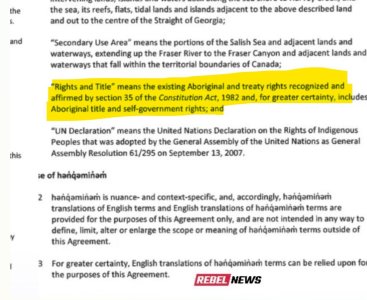
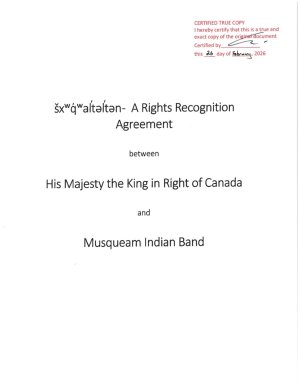
And now the federal government has announced that the Musqueam hold Aboriginal title to Vancouver and its suburbs. In an interesting twist, the area covered by the Musqueam agreements appears to include Richmond, where the B.C. Supreme Court found Cowichan title to exist. Stoke that fire, folks. The federal government has not officially released the text of the agreements, but at least one of them can be found on a government website. Its purpose is to “recognize Musqueam’s Rights and Title within Musqueam Territory” and to “contribute to the implementation of the UN Declaration.” In a press release, the feds have said they have recognized Aboriginal title, created “shared decision-making” over water and resources, and established a “framework for incremental implementation of rights and nation-to-nation relations with Canada.”
Security of property in B.C. is going up in smoke. These are not policy mistakes. The B.C. and federal governments understand what they are doing. A new generation of political leaders seems determined to cripple their own country. If you are surprised, you haven’t been paying attention. If you are outraged, you must be a settler. If you are a property owner in the Lower Mainland, suck it up for reconciliation. After all, we live on native land. Haven’t you been paying attention to land acknowledgements?
Many Canadians cannot even recognize the attack. Their obsequious devotion to reconciliation gets in the way. They are stuck in a stupor of acquiescence and disbelief. The beaver is too good for Canada’s national symbol. The country deserves the ostrich.
https://www.fraserinstitute.org/commentary/ottawa-pours-oil-fire-burning-bc-property-rights



 globalnews.ca