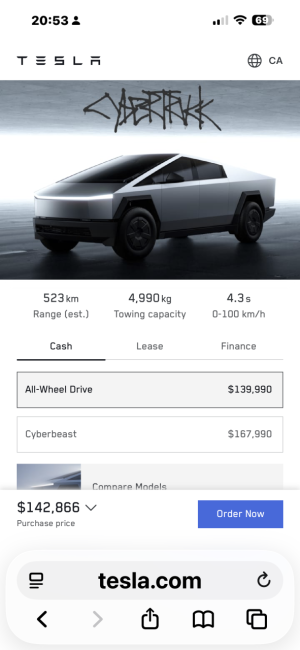
One of the core values at Tesla is energy efficiency, and they're probably the number one overall in those metrics. One of the most important aspects of efficiency is aerodynamic drag. Reduce frontal area and lower the Cd (coefficient of drag) and you have a car that goes further on a charge without the expense and weight of a bigger battery. So their engineers for years have worked hard to make Teslas as slippery as possible.
The recessed door handles is a part of that, I get it. But they've made them needlessly complicated and overengineered, same with the motorized charge port cover. Take a look at a Ford Mach e to see how a longtime car maker does flush handles and covers without additional electrical complexity. For Lightning, they didn't bother and just went with standard F150 handles. Trucks are so un-aero that the design team obviously decided "why bother"?
EV purists and Tesla fanbois will sniff haughtily at "legacy auto makers", and they have a point in some areas. No question that Tesla has brought EVs into mainstream viability years sooner than if we'd left established car companies to do it, but they lack the decades of experience and data to know what works and what doesn't, what lasts and what gives trouble. My take is Tesla makes excellent EVs, but they're still learning how to build cars and trucks. Ford and GM first-run EV products like Mach e, Lightning, Bolt, Equinox, Silverado have performed well right from launch, with few issues. They have such a vast corporate reserve of design and engineering knowledge that designing and sourcing electric drivetrain components is well within their capacity, while a ground-up design from a company that has no track record building vehicles at all is a far steeper learning curve. You won't see body trims glued onto a Lightning or an e-Silverado, or a trailer hitch that can be sheared off by some maniac youtuber. Sometimes "Doing it differently" isn't always the right path.