

You are using an out of date browser. It may not display this or other websites correctly.
You should upgrade or use an alternative browser.
You should upgrade or use an alternative browser.
Aquaculture improving?..The Fish Farm Thread
- Thread starter islandboy
- Start date

SpringFever2359
Well-Known Member
Brendan Morrison did a show on that lake a few yrs backLois lake has been a mess for years. I guess they walked away after the charges by dfo and the fact that coming into compliance would cost too much. The guys that fish the lake are going to miss those big trout.
Were these the people that made the lake a mess? Can a company just walk away and leave their crap behind for someone else to clean up.Lois lake has been a mess for years. I guess they walked away after the charges by dfo and the fact that coming into compliance would cost too much. The guys that fish the lake are going to miss those big trout.

North Island salmon populations rebounding, but gaps in data remain
Populations fluctuating across west coast
 www.northislandgazette.com
wildmanyeah
Crew Member
Last year she said that the improved chum returns were the result of fish farms being removed chum returns back down in dumps and not a peep about it.
Trying to relate salmon returns to fish farms being there or not is a fools game and she’s the star player.
Trying to relate salmon returns to fish farms being there or not is a fools game and she’s the star player.
Last edited:
wildmanyeah
Crew Member
They conclude:
“removing open net pen salmon farms will have no detectable effect on wild salmon population productivity.”
SpringFever2359
Well-Known Member
Last year she said that the improved chum returns were the result of fish farms being removed chum returns back down in dumps and not a peep about it.
Trying to relate salmon returns to fish farms being there or not is a fools game and she’s the star player.
Most everyone knows why its crickets from am...she cant bleed more $$ from gullible donors
Too Important for Guesswork
Too Important for Guesswork – Alexandra Morton Blog
Dear Minister Joanne Thompson, I received a reply from Regional Director Neil Davis, in response to my September 10, 2025 letter asking if you could identify the “new technology” Cermaq claims has solved their sea lice problem. Neil didn’t answer my question. A large portion of his letter was...
 alexandramortonblog.com
Some interesting opinions in there but AM really puts her spin on things and omits some stats on sockeye returns when there was farms . Why are sockeye in other areas with out farms not experiencing record returns? More than one impact affects fish populations.... but AM does not seem to care about anything other than ff.
https://sportfishingbc.com/attachments/1764735131708-jpeg.122885/
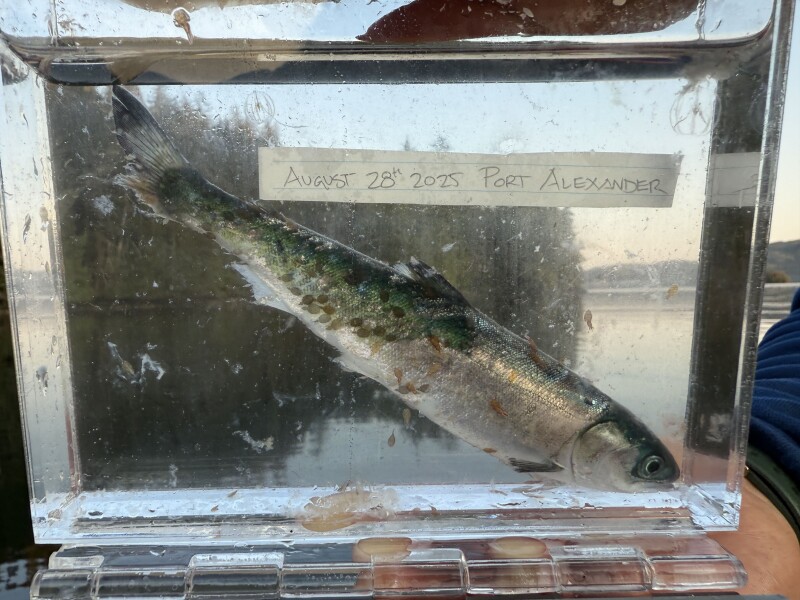 Jody Eriksson has been collecting and inspecting salmon smolt for twenty-one years. He concludes that sea lice from salmon farms are killing millions of smolts like this chum carrying 200 sea lice in various stages of development. Jody Eriksson photo.
There's actually ~10 ONPSFs STILL OPERATING near Port Hardy - which is where this fish was caught - to the NW of Hardy. That's kinda the point, HG:
 namgis.bc.ca
‘Na̱mg̱is First Nation: New Evidence of Sea Lice on Salmon Unacceptable - 'Na̱mg̱is First Nation
‘Na̱mg̱is First Nation calls new evidence of extreme sea lice on young salmon near Port Hardy “unacceptable” and reaffirms protection efforts.
namgis.bc.ca
wildmanyeah
Crew Member
This is what AI says about that photo
- What looks like sea lice: Sea lice (primarily Lepeophtheirus salmonis or Caligus spp.) are small, semi-transparent crustacean parasites (1–5 mm long) that attach to salmon skin and fins, often appearing as pale, oval, or reddish spots. In this photo, the small, clustered dots on the tray's sides and bottom—especially the reddish ones—do resemble early-stage (larval/copepodid) lice. However, based on the image details and context, these are almost certainly not lice on the fish itself. Instead:
- The fish's body (dorsal side up) shows clean, silvery-green skin with typical parr marks (dark vertical bars) and no visible attachments or lesions.
- The "lice-like" spots are primarily on the tray walls and base, not adhering to the fish. This is common in field samples: during transfer from net to container, loose particles or detached parasites from other fish/gear can settle on the plastic. The tray's condensation and ripples further scatter these, creating an optical illusion of infestation.
- Actual lice on this fish? Likely minimal to none visible here. Real infestations on juvenile wild salmon often start subtle (e.g., 1–10 lice per fish in early stages). If there were hundreds (as reported in nearby Port Hardy samples from the same date), they'd be densely packed on the fish, causing skin damage.
I don't need AI to see that the fins are ragged not much clean silvery skin and not seeing an optical illusion. So much for AI.This is what AI says about that photo
- What looks like sea lice: Sea lice (primarily Lepeophtheirus salmonis or Caligus spp.) are small, semi-transparent crustacean parasites (1–5 mm long) that attach to salmon skin and fins, often appearing as pale, oval, or reddish spots. In this photo, the small, clustered dots on the tray's sides and bottom—especially the reddish ones—do resemble early-stage (larval/copepodid) lice. However, based on the image details and context, these are almost certainly not lice on the fish itself. Instead:
- The fish's body (dorsal side up) shows clean, silvery-green skin with typical parr marks (dark vertical bars) and no visible attachments or lesions.
- The "lice-like" spots are primarily on the tray walls and base, not adhering to the fish. This is common in field samples: during transfer from net to container, loose particles or detached parasites from other fish/gear can settle on the plastic. The tray's condensation and ripples further scatter these, creating an optical illusion of infestation.
- Actual lice on this fish? Likely minimal to none visible here. Real infestations on juvenile wild salmon often start subtle (e.g., 1–10 lice per fish in early stages). If there were hundreds (as reported in nearby Port Hardy samples from the same date), they'd be densely packed on the fish, causing skin damage.
wildmanyeah
Crew Member
There's actually ~10 ONPSFs STILL OPERATING near Port Hardy - which is where this fish was caught - to the NW of Hardy. That's kinda the point, HG:
‘Na̱mg̱is First Nation: New Evidence of Sea Lice on Salmon Unacceptable - 'Na̱mg̱is First Nation
‘Na̱mg̱is First Nation calls new evidence of extreme sea lice on young salmon near Port Hardy “unacceptable” and reaffirms protection efforts.

Thanks for the chuckle, WMY - as well as the intended distraction. I used AI to review your post. This is what it said:This is what AI says about that photo
- What looks like sea lice: Sea lice (primarily Lepeophtheirus salmonis or Caligus spp.) are small, semi-transparent crustacean parasites (1–5 mm long) that attach to salmon skin and fins, often appearing as pale, oval, or reddish spots. In this photo, the small, clustered dots on the tray's sides and bottom—especially the reddish ones—do resemble early-stage (larval/copepodid) lice. However, based on the image details and context, these are almost certainly not lice on the fish itself. Instead:
- The fish's body (dorsal side up) shows clean, silvery-green skin with typical parr marks (dark vertical bars) and no visible attachments or lesions.
- The "lice-like" spots are primarily on the tray walls and base, not adhering to the fish. This is common in field samples: during transfer from net to container, loose particles or detached parasites from other fish/gear can settle on the plastic. The tray's condensation and ripples further scatter these, creating an optical illusion of infestation.
- Actual lice on this fish? Likely minimal to none visible here. Real infestations on juvenile wild salmon often start subtle (e.g., 1–10 lice per fish in early stages). If there were hundreds (as reported in nearby Port Hardy samples from the same date), they'd be densely packed on the fish, causing skin damage.
SpringFever2359
Well-Known Member
https://sportfishingbc.com/attachments/1764735131708-jpeg.122885/
Jody Eriksson has been collecting and inspecting salmon smolt for twenty-one years. He concludes that sea lice from salmon farms are killing millions of smolts like this chum carrying 200 sea lice in various stages of development. Jody Eriksson photo.
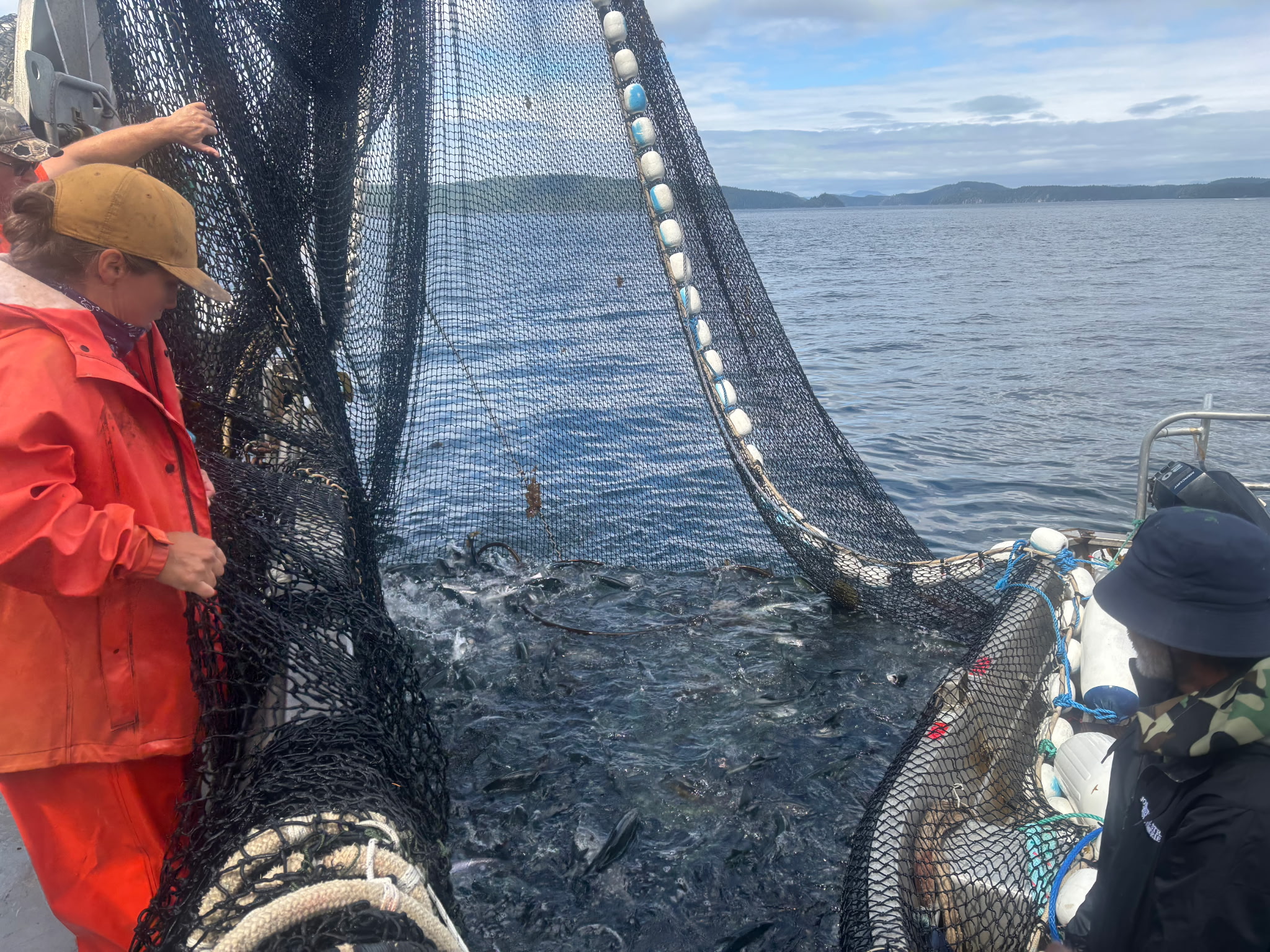
Show us the unedited video of
a net going into the ocean and coming out of the ocean with that smolt with all those lice on it and you may garner more people to your side of the argument, until then its very hard, bordering on impossible to believe its real
Similar threads
- Replies
- 0
- Views
- 476

- Replies
- 5
- Views
- 814
- Replies
- 12
- Views
- 2K

- Replies
- 0
- Views
- 276