Trudeau promises more gun control and goes on the attack against Scheer

LOL!!!

Gun control group criticizes Ottawa over 'poor participation' in firearm buyback​

OTTAWA — Gun control advocacy group PolySeSouvient blames "weak political leadership" for what it calls "poor participation" in a federal compensation program for banned firearms.

Public Safety Minister Gary Anandasangaree said Tuesday that gun owners had reported more than 52,000 firearms to the government with one week left to go in the program to provide compensation for banned guns.

That figure is well short of the 136,000 firearms for which the Liberal government set aside compensation money when the buyback for individual owners opened in January.

In a media statement issued Wednesday, PolySeSouvient said weak messaging about the program has failed to counter misinformation and disingenuous provincial manoeuvring.

Since May 2020, Ottawa has outlawed about 2,500 types of firearms, including the AR-15 and Ruger Mini-14, on the basis they belong only on the battlefield.

Prohibited firearms and devices must be disposed of or deactivated by the end of an amnesty period on Oct. 30, regardless of whether gun owners take part in the compensation program.

Owners have until Tuesday to declare interest in the buyback program.

Anandasangaree said earlier this week he was "cautiously optimistic" as the deadline approaches.

Conservative MPs and some firearm owners say the buyback is a wasteful exercise that targets law-abiding citizens.

Conservative public safety critic Frank Caputo said this week the Liberals should use the hundreds of millions of dollars earmarked for compensation to go after criminals and their guns, and to hire new RCMP officers.

PolySeSouvient, which has long pushed for a comprehensive buyback program, said that while the gun lobby is celebrating the fact that a large number of gun owners have so far held back from registering with the program, "the fact remains that refusing to participate in the buyback does not exempt anyone from the law."

It only means gun owners who don't participate won't be financially compensated for firearms that will be illegal to possess after Oct. 30, the group noted.

Quebec supports the federal compensation program but a number of other provinces and territories — including Alberta, Saskatchewan, Manitoba, Ontario and Newfoundland and Labrador — have snubbed the plan.

Saskatchewan has introduced amendments to the province's firearms law it says will help gun owners and businesses receive fair compensation for their property.

It says once the changes pass, Saskatchewan firearms owners and businesses will be able to apply for a certificate of exemption allowing them to continue to possess and store their lawfully owned — but now prohibited — firearms on behalf of the province.

Saskatchewan says these certificates will remain in place until firearms owners are fairly compensated by the federal government.

PolySeSouvient says such tactics may have led many gun owners to believe they will be exempted from the federal ban, contributing to low participation in Ottawa's compensation program.

"Minister Anandasangaree has not provided gun owners with a realistic perspective regarding the feasibility or constitutionality of such political and legal manoeuvrings," the group's statement said.

"He should, at the very least and immediately, promise that Ottawa will challenge any legal tactic that counters the federal government's authority to prohibit the private ownership of specific weapons."

The government's decision not to include the SKS rifle in the list of banned guns has contributed to the buyback's "poor results," PolySeSouvient says.

The SKS is commonly used in Indigenous communities to hunt for food. It also has been used in police killings and other high-profile shootings in recent years.

The Liberal government says it is carrying out a broad review of Canada's firearms classification regime that will include consultations with Indigenous communities on the SKS.

PolySeSouvient and other gun control advocacy groups have called on Ottawa to immediately end new SKS sales while exempting models currently used by Indigenous hunters from prohibition.


Gun grab deadline looms as majority of owners yet to register​

With less than a week before a federal compensation deadline, tens of thousands of prohibited firearms remain unregistered under Ottawa’s controversial gun grab program, raising fresh questions about compliance and enforcement.

Public Safety Minister "Gun Grab" Gary Anandasangaree says more than 166,000 so-called “assault-style” firearms fall under the program, which is expected to cost taxpayers roughly $742 million.

However, just over 51,000 of those firearms have been registered so far, with only days remaining before the March 31 cutoff.

“I want to just thank everyone who has already taken their civic duty seriously and enrolled in the program,” Anandasangaree said, urging remaining owners to come forward.

“This is a critical part of the work our government is doing.”

Blacklock's Reporter said according to figures tabled in the House of Commons, a total of 166,555 firearms are subject to the buyback, meaning fewer than one-third have been declared for compensation.

After the March 31 deadline, an amnesty period will remain in place until October 31. Once that expires, owners of prohibited firearms could face criminal charges if they fail to comply.

“This is a voluntary program, however compliance under the Act will not be voluntary as of October 31,” Anandasangaree said.

The minister also pointed to participation numbers, saying more than 26,000 individuals have signed up so far, accounting for over 51,000 firearms.

Still, those figures drew skepticism from reporters who noted the relatively low uptake compared to the estimated total.

Despite federal assurances, police agencies in Alberta, Saskatchewan, Ontario and Québec have signalled reluctance to take part in enforcing the program, creating uncertainty over how the rules will ultimately be applied.

“We expect every police service to abide by and uphold the law in Canada,” Anandasangaree said when pressed on the issue, adding that individual departments have made their own decisions.

Internal federal research suggests the program faces significant resistance among gun owners.

A Privy Council survey found 67% of affected firearm owners said they were “not likely” to participate, with that number rising to 71% in Alberta and Saskatchewan.

The same research acknowledged a broader trust deficit, concluding the federal government is “unlikely to be the most trusted messenger” among firearms owners, increasing the risk of widespread non-compliance.

Survey results also showed 63% of Canadians polled said they distrust the federal government to maintain public safety.

When asked what would motivate them to surrender prohibited firearms, only 25% cited compliance with the law as a key factor.

With the deadline fast approaching, the gap between government expectations and actual participation continues to widen, setting up a potential enforcement challenge later this year.

 
Breaking News: Today in the Yukon Legislative Assembly, MLA Tyler Porter moved 'Motion No. 54 re: Assault-Style Firearms Compensation Program carve-out,' paving the road for Canada's 3 northern territories to seek a 'carve-out' (exemption) from the federal government's gun confiscation regime.

Justice Minister Laura Lang told of failed meetings she had with Safety Minister Gary Anandasangaree who has chosen to ignore her requests. She read a letter she sent to him this month in frustration asking the Liberal government to leave Canadian gun owners in the north alone.

She said she had met with the other territories before deciding to band together in hopes of getting an exemption.

The motion passed despite an effort by Liberal opposition to add an amendment.

Note: Video of today's legislature was not available so we've thrown together the audio with some images of the speakers so you can see what went down today.

 
MP says firearms ban targets ‘legal gun owners’ as Supreme Court agrees to hear appeal

The Supreme Court will hear the Canadian Coalition for Firearm Rights’ appeal of the government’s ban of more than 2,500 firearms.

FORT ST. JOHN, B.C. — The Supreme Court of Canada will hear an appeal from the Canadian Coalition for Firearm Rights (CCFR) against the federal government’s ban on certain firearms.

Former Prime Minister Justin Trudeau’s government announced a ban of over 1,500 models of assault-style firearms on May 1st, 2020, following the mass shooting in Nova Scotia in April 2020.

Since the ban was announced, the Federal Government has prohibited more than 2,500 firearms.

On January 17th, 2026, Gary Anandasangaree, minister of public safety, announced the opening of an assault-style firearms compensation program.

“Assault-style firearms do not belong in our communities,” Anandasangaree said in a press release at the time. “These types of firearms were designed as weapons of war. Prohibiting and removing them from our communities is an important part of our government’s commitment to tackling gun violence and keeping Canadians safe.”

The Supreme Court will hear the CCFR’s case after previous appeals were denied at both the Federal Court and the Federal Court of Appeal.

Member of Parliament for Prince George-Peace River-Northern Rockies, Bob Zimmer, told Energeticcity.ca the ban is affecting the wrong group of people.

“It’s been wrongly targeting lawful Canadians,” Zimmer said. “Instead of targeting criminals in possession of illegal firearms.”

The CCFR claims the government’s use of an Order in Council (OIC) exceeds the scope of the governor in councils regulation-making power under the Criminal Code.

According to The Canadian Encyclopedia, an OIC is a regulation or law that receives explicit permission or rejection from the governor general of Canada.

An OIC is drafted by the government’s cabinet before being ruled upon by the governor general.

Before being implemented, an OIC is not required to be debated by parliament.

The Criminal Code s. 117.15(2) says: “In making regulations, the governor in council may not prescribe any thing to be a prohibited firearm, a restricted firearm, a prohibited weapon, a restricted weapon, a prohibited device or prohibited ammunition if, in the opinion of the governor in council, the thing to be prescribed is reasonable for use in Canada for hunting or sporting purposes.”

Zimmer told Energeticcity.ca he believes that the government went against the Criminal Code in passing this regulation.

“OIC were specifically meant not to reclassify firearms,“ Zimmer said. “It says it right in the regulations themselves, yet the government chose to do that.”

Simon Lafortune, spokesperson for the Ministry of Public Safety, defended the government’s position.

“Canadians expect their governments and police forces to work collaboratively to keep communities safe,” Lafortune said in a statement provided to Energeticcity.ca. “Several contribution agreements are in the works with provinces and municipalities to facilitate the process for law-abiding gun owners across Canada that wish to be properly compensated for their now-prohibited assault-style firearm.”

The CCFR says the “landmark” case is a “pivotal” moment for legal firearm owners affected by the ban and for Canada’s democracy.

The case is currently before the Supreme Court of Canada.

 
From the CCFR:

As the deadline for declarations for the ASFCP (Assault Style Firearm Compensation Program) draws near, the Liberal government is boasting the 51,000 declarations so far as a win.

Of course, you'll remember the target number they say they're willing to pay for is fluid - it keeps changing from 136,000 to 151,000 to 155,000.

This is out of an estimated 2,000,000+ affected firearms. Long story short, they're planning to rip off almost everyone.

Canadian gun owners have received a number of scare-emails we like to call fear spam, warning you that the end is near, and you should hurry up and declare your guns to the government, in the hopes of getting your share of the very small and limited compensation pot. It's like the Hunger Games for gun owners where you have to compete for the small chance, of maybe, perhaps getting a fraction of the value of your legall acquired property.

But then the whole game changed. The Supreme Court of Canada announced last Thursday that they would hear our case, CCFR v Canada.

This is our court challenge against the gun ban and if successful, would turn the tables on this whole fiasco .... but not if you've already surrendered your guns. Some gun owners succumbed to the pressure from the government and filled out the declaration.

We're not going to beat them up for this, it's a well orchestrated fear campaign with threats of criminal charges and cancelled PAL's. But the good news is, it's not too late to withdraw from the ASFCP. You can back out and hold the line with the rest of us and we're going to show you how in this web story.

Below you will find the "Terms and Conditions" of the ASFCP as posted by Public Safety. We want to draw your attention to #8 in the list - instructions on how to withdraw from the program.

ASFCP Terms and Conditions Download


"You can withdraw your consent from the program until firearms are collected. After
collection, the application cannot be withdrawn and will be processed fully. To
withdraw consent, contact the program’s Contact Centre 1-833-759-4551. Upon
receipt of your request, the application and consent to use the provided information
will be considered withdrawn"


That number again is 1-833-759-4551

Another option available to you is to wait to be contacted by the program to arrange surrender of your firearms and then clearly state to the caller that you are no longer interested in participating. Refuse any appointment offered and get off the phone. If you are contacted again, repeat this statement and asked to be removed from the program and the call list. Let us know if you have any problems.

You may also want to read the following documents related to the ASFCP.

ASFCP_Consent to Allow Contact Centre Access to Personal Information Download


ASFCP_Consent and Disclosure Agreement Download


For those wondering if the court case may stretch out past the amnesty date, the CCFR will be filing for an injunction in the coming weeks to extend the amnesty and protect you while the case makes its way through the highest court.

Everyone must make the decision that's right for them, but reducing the already failing numbers for this gun grab is essential. Please, if you can, consider withdrawing from the ASFCP if you have already declared.

Hold.The.Line.
 

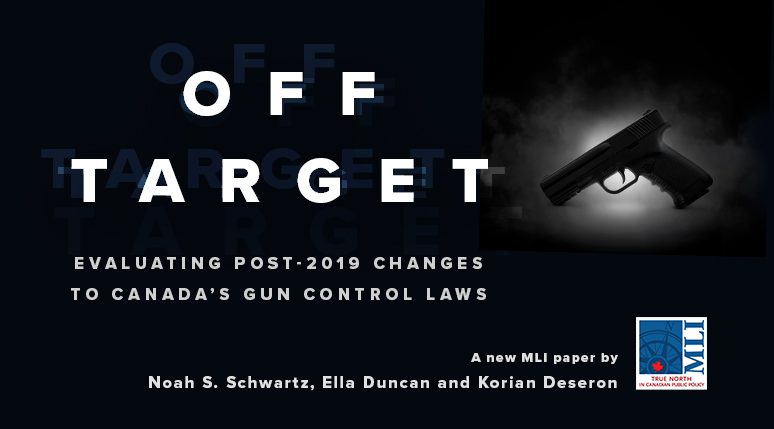
Off Target: Evaluating post-2019 changes to Canada’s gun control laws​

The federal government has a choice – it can continue with restrictive measures that offer diminishing returns and deepen social divisions, or it can adopt a strategy that targets illicit smuggling and 3-D-printed firearms.

Executive Summary | Sommaire (le français suit)

Since 2019, the landscape of Canadian firearms legislation has undergone a seismic shift. Through a series of sweeping executive and legislative actions, the federal government has implemented a national freeze on legal handgun sales, banned thousands of models of so-called “assault-style” weapons, and tightened administrative requirements for licensing and transfers.

While these measures are often framed as essential for public safety, they have remained largely unexamined by independent researchers – until now.

Using the Firearms Policy Evaluation Framework, our study provides a rigorous assessment of these policy shifts. Drawing on a deep dive into the literature on gun control policy, as well as interviews with law enforcement, community workers, and stakeholders, we found that:

• There is no evidence to support a prohibition or confiscation (buyback) of assault-style weapons in the Canadian context.
• There is no evidence to support a freeze on the legal sales of handguns to licensed gun owners.
• Police are concerned with smuggled firearms from the United States and privately manufactured firearms (PMFs), not legal gun owners.

These policies are causing real harm to communities of hunters and sports shooters, Indigenous people, and Canada’s economy and heritage. For instance, the tighter gun restrictions impact small businesses, shooting ranges, historical re-enactors, and the competitive sport shooting community. For Indigenous communities, firearms are essential tools for subsistence and traditional ways of life. Meanwhile, the gun control debate is pitting rural Canadians – who are more likely to use legal long guns for hunting and recreational shooting – against urbanites who may not own guns themselves, but whose communities suffer higher levels of gun violence from gangs and criminals wielding illicit and/or smuggled firearms.

At the same time, there is mounting institutional opposition to Ottawa’s mandatory buyback program from provincial governments, territorial leaders, and police unions across the country, who say limited policing resources should focus on actual criminals.

To enhance safety and national unity, the federal government must pivot toward “precision policy,” targeting the root causes of violence rather than the activities of legal gun owners, by:

• Investing in intelligence and intervention: Shift resources from prohibitions to border integrity and community programs. This includes disrupting US smuggling routes and providing sustained funding for violence interruption and community policing.

• Improving data transparency: Oversight is impossible without information. The federal government should publish anonymized data on “red flag” petitions and licence revocations to ensure the system is effective, accountable, and free from abuse.

• Modernizing classification: The current politicized classification system should be replaced with a transparent, evidence-based model similar to the one used in Czechia. Reversing the “assault-style” ban would respect the rights of vetted shooters without compromising public safety.

• Ending the handgun freeze: The freeze provides no measurable safety benefit to an already strictly regulated sector. Restoring a legal handgun market would save businesses and heritage sports while allowing police to focus on actual criminal threats.

The federal government has a choice – it can continue with restrictive measures that offer diminishing returns and deepen social divisions, or it can adopt a strategy that targets illicit smuggling and 3-D-printed firearms. By prioritizing legitimate community violence prevention over symbolic bans, the government can protect both public safety and the rights of law-abiding citizens.


The Paper in full: https://macdonaldlaurier.ca/wp-content/uploads/2026/03/Off-Target-Final-1.pdf
 
Just a reminder that if anyone is still considering applying to the "buy back" progam you have until midnight tomorrow to do so.

Related post on Reddit:

Withdrew from the ASFCP / Retiré du PIAFSAA

I have just finished withdrawing from the ASFCP, and wanted to share my experience about it for anyone else considering doing the same.

Why I registered back in January:

Not looking to make excuses, just giving some context around my situation, and why I made my initial decision:

- I had two non-registered firearms affected, both were due for compensation at more or less the exact pre-tax value I purchased them for.

- I am a Québec resident, and therefore, due to the Register, the government already knew what I had.

- Also being a Québec resident, I knew I was more guaranteed than not, to actually receive the compensation.

- I was planning to use the proceeds from my reimbursement to purchase further available firearms. (I ended up purchasing two for each one banned to 'make up for it'.)

- I had also figured that in the event of a class-action lawsuit, having registered may have been a pre-requisite to claim damages.

- I was planning to paint my rifles pink before turning them in, and adorning them with '<3 Nathalie' white ink covering them to not give them the photo-op opportunity.

Why I decided to Withdraw:

I originally registered in a panic when it opened up, especially as I could have really used the money. Since then however, over the months that have passed, I've been feeling incredibly guilty and regretful in my decision to take part in this. I was also hugely inspired by hearing the numbers they published, and how many people had held strong in solidarity.

Additionally, and one of the most important factors; the behaviour of Nathalie Provost during the last press conference was absolutely disgraceful. She has absolutely no place in government. That ended up being the last straw for me, especially the part where she started yelling at us to 'do our civic duty'.

So Nathalie, if you're reading this, well done; you pushed me to do my actual civic duty.

How the Withdrawal Process Went:

- I called 1-833-759-4551, selected English, and had to go through a couple robo-navigation options.

- I was first in line, and was connected to an agent within less than 1 minute.

- Upon learning of the reason for my call, the agent asked me what the reason for my withdrawal was, to which I explained it was Nathalie Provost's fault, and was withdrawing as a form of protest.

- Following that, I was simply asked for my PAL #, my name, DoB, and email address.

The agent then went away for a couple minutes, and returned to basically take me through the 'things I should know' which included (to the best of my note-taking abilities):

- My case will be moved to 'inactive', but it will not be purged from the system. However, it will be destroyed after 2 years.

- Previously-submitted information may be accessed for monitoring and tracking.

- Withdrawal doesn't mean I don't have to turn them in.

- They can be de-activated or destroyed outside of the programme.

- If the government comes asking me about my firearms, withdrawal doesn't mean I am exempt from cooperating with them.

- If my firearms are used in criminal activity, they may be traced back to me.

Once I agreed to all of this, he then left for a second very short hold of a couple min, and then returned to inform me that I can expect to receive a phone call from a representative from Public Safety Canada within 10 days to discuss further, and he gave me a case number to use with them.

He then asked me which province I was calling from, and that was the end of the call.

I timed it from start to finish, it only took 13 minutes total.

The agent was absolutely lovely, super professional -- overall really a 10/10 experience on that front.

Conclusion

If you are in a similar position to me, please consider doing so; its not too late! It was a genuinely super easy and painless process.

The prospect of losing the cash hurts, but what hurt more was, over the past months, knowing I didn't do the right thing.

With the absolutely catastrophic participation, and the upcoming Supreme Court Challenge, we have a better chance than ever.
 

Some Canadians pull out of federal gun grab program at the last minute​

CALGARY — Tuesday marked the final day for Canadian gun owners to declare their prohibited firearms and receive compensation as part of the Liberal government’s gun grab program, and some gun owners are backtracking on their declaration.

Earlier this month, Public Safety Canada announced that more than 47,000 firearms had been declared across Canada after two months of the program — a number that represented roughly 2% of all guns prohibited by Ottawa, according to some critics.

Now, with deadline day arriving, some gun owners are regretting their decision to comply and are withdrawing from the Assault-Style Firearms Compensation Program (ASFCP).

One user on the subreddit r/canadaguns cited remarks made by MP Nathalie Provost (Chateauguay—Les Jardins-de-Napierville), a gun control advocate and survivor of the 1989 Ecole Polytechnique massacre, during a recent press conference as the reason for their decision, alleging her comments pushed them to withdraw as a form of protest.

The individual — who identified as a Quebec resident — said they had originally “registered in a panic when registration opened up, especially as I could have really used the money.”

However, over the past few months, the individual said they had been “feeling incredibly guilty and regretful about my decision to take part in this.”

“I was also hugely inspired by hearing the numbers they published, and how many people had held strong in solidarity,” the Reddit user said, adding that one of the most important factors in their decision was Provost’s behaviour, calling it “absolutely disgraceful.”

“She has absolutely no place in government,” the Reddit user went on.

“That ended up being the last straw for me, especially the part where she started yelling at us to ‘do our civic duty’. So Nathalie, if you’re reading this, well done; you pushed me to do my actual civic duty.”

The individual went on to describe the withdrawal process as relatively straightforward, saying they contacted the program’s call centre and were connected to an agent within minutes.

After providing identifying information, they were informed their file would be marked inactive but retained temporarily, and would be “destroyed after two years.”

According to the Reddit user, participants who withdraw may still be required to comply with government requests related to their firearms, and previously submitted information could still be used for monitoring purposes.

The individual also added that “if the government comes asking me about my firearms, withdrawal doesn’t mean I am exempt from cooperating with them.”

The Reddit user revealed the entire process took roughly 13 minutes.

Despite forfeiting compensation, the individual stated they believed withdrawing from the program was the right move.

“The prospect of losing the cash hurts, but what hurt more was, over the past months, knowing I didn’t do the right thing,” the Reddit user said.

“With the absolutely catastrophic participation, and the upcoming Supreme Court challenge, we have a better chance than ever. In any case, no matter what happens, see y’all at the range.”

I am guessing we are going to get stonewalled on numbers of withdrawals.

It's pretty obvious to most people that the completion rate for this program is going to be much lower than currently advertised.

Thank you Secretary of State Nature, you really exposed everything."


Reaction online was predominantly supportive of the Redditor’s post, with one X user saying that they were guessing Canadians are “going to get stonewalled on the number of withdrawals.”

“It's pretty obvious to most people that the completion rate for this program is going to be much lower than currently advertised,” the user said.

“No one has been more harmful to the cause of anti-gun support than the anti-gun lobby," another commentator said.

"They stand on a foundation of lies and feelings."

Speaking at a press conference on Tuesday, Prime Minister Mark Carney said that he wanted to thank those who worked on the gun grab program and “made it possible,” as well as gun owners who “brought forward their weapons for compensation.”

When asked if the number of firearms that had been declared was close to the government’s estimates, the prime minister did not give a clear answer as to exact numbers.

“It’s not as high as the estimates of the number of guns,” Carney said.

“There’s obviously a gap there.”

 
Back
Top