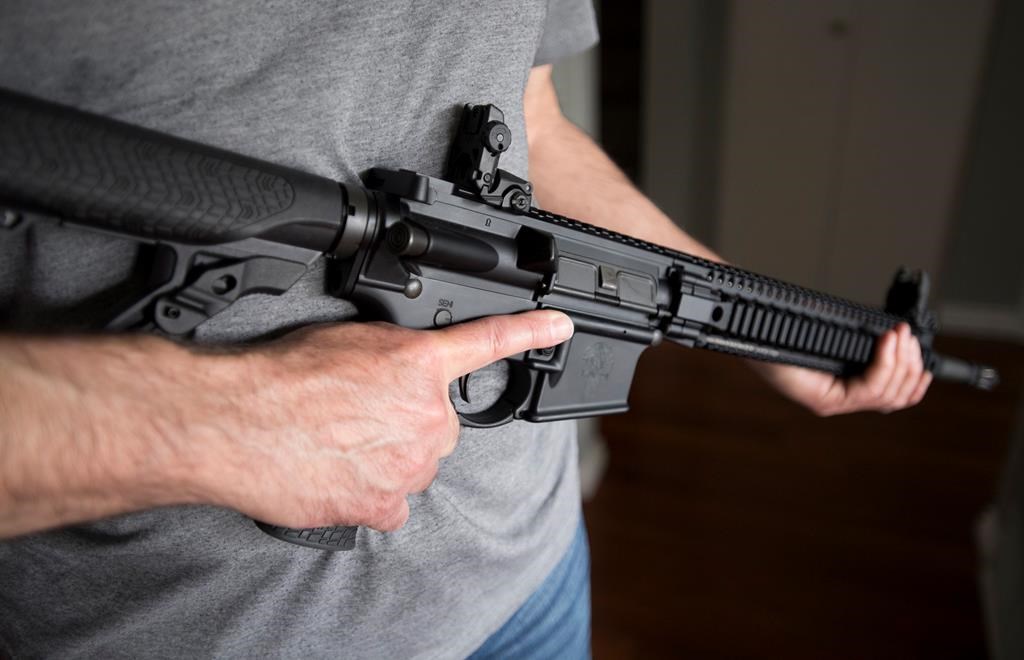
Trudeau promises more gun control and goes on the attack against Scheer

Why Canada’s Firearms Buyback and License-Revocation Threats Are Likely to Be Loud in Rhetoric, Soft in Reality​

A Political Engineering Analysis over current buyback situation and why you should not lose hope.

From a political-engineering perspective, large public policies are not judged by moral language, but by whether they survive four stress tests:
  • Administrative capacity
  • Economic cost
  • Political risk
  • Compliance reality
Canada’s federal firearms buyback—and the threat to revoke licenses for non-compliance—struggles in all four.


1. Administrative Capacity: The System Is Too Heavy​

A nationwide buyback requires:
  • Identifying and contacting owners
  • Verifying models, variants, and legal status
  • Transport, storage, destruction, auditing
  • Dispute handling, appeals, court challenges
This is not a simple “send it back” program. Firearms classification is already legally fragile—courts and RCMP often disagree on what counts as prohibited.

Political engineering rule:
If a system can’t classify clearly, it can’t enforce cleanly.

A vague system defaults to:
  • Delays
  • Exemptions
  • Extensions
  • “Temporary” amnesties that quietly become permanent

2. Cost Structure: The Price Tag Scares Politicians​

Initial estimates were in the hundreds of millions. They now trend toward billions once logistics, staff, IT systems, legal defense, storage, and destruction are included.

But politically, buybacks do not generate visible public goods:
  • No bridges
  • No hospitals
  • No schools
They only generate headlines.

Political engineering rule:
Expensive programs without visible benefits are the first to be quietly softened, slowed, or re-scoped.

That’s why you see:
  • Endless “implementation phases”
  • Shifting deadlines
  • Pilot programs instead of full rollout
Classic damage-control behavior.

3. Political Risk: Punishing Millions Is a Losing Game​

Even politicians who dislike civilian firearms understand:
  • Millions of owners = millions of families
  • Many are rural, working-class, veterans, hunters
  • Heavy enforcement means police vs. law-abiding citizens
That produces:
  • Bad optics
  • Viral videos
  • Court cases
  • Regional backlash
Political engineering rule:
Policies that force mass confrontation are softened unless the state is willing to absorb long-term legitimacy damage.

Canada prefers quiet compliance, not spectacle.


4. Compliance Reality: Laws Without Buy-In Become Symbolic​

High-compliance laws share one feature:
People believe in them even if enforcement is weak.

Low-compliance laws share another:
People don’t see them as morally legitimate.

Many owners view the buyback as:
  • Symbolic politics
  • Collective punishment
  • Emotion-driven rather than evidence-driven
That leads to:
  • Passive resistance
  • Legal challenges
  • Slow compliance
  • Pressure to extend amnesties
Political engineering rule:
When compliance is contested, enforcement becomes selective, delayed, and symbolic.


5. “We’ll Revoke Your License”: Sounds Strong, Works Weak​

How do they even know who has what?​

  • Restricted firearms are registered.
  • Non-restricted firearms are not individually registered.
  • They often know you’re a gun owner type, not exactly what you own.
  • Records are outdated, incomplete, or legally disputable.
Rule:
If the state can’t map ownership clearly, enforcement becomes selective and fragile.

What does revoking a license actually do?

Revoking a PAL means you must:
  • Surrender firearms
  • Transfer them
  • Or store them with a licensed third party
But mass revocation would require:
  • Huge investigations
  • Appeals and court challenges
  • Police enforcement at scale
Political engineering rule:
States avoid creating large populations of “paper criminals” because it overloads courts, police, and legitimacy.

So what happens instead:
  • Revocation used selectively
  • Mostly tied to people already in conflict with police
  • Used as leverage and pressure—not mass policy
Threats are cheap. Enforcement is expensive.


6. Why “Mass Jail” Is Extremely Unlikely​

To jail large numbers, the state would need:
  • Clear definitions
  • Huge investigative capacity
  • Massive court throughput
  • Willingness to absorb backlash
None exist at scale.

Governments prefer:
  • Amnesty extensions
  • Quiet grandfathering
  • Administrative limbo
Not:
  • Mass arrests
  • Mass trials
  • Mass incarceration
Because those destroy political capital fastest.

So the likely outcome:
  • Long timelines
  • Soft enforcement
  • Deadline extensions
  • Selective prosecution only in extreme or unrelated criminal cases
Not a sweeping “go to jail” scenario.


7. The Pattern This Fits​

This policy fits a common pattern:
  1. Strong moral language
  2. Weak administrative machinery
  3. Rising cost
  4. Political fatigue
  5. Quiet de-escalation
Translation:
The louder the announcement and the slower the execution, the more symbolic the policy becomes.


Conclusion​

From a political-engineering perspective, Canada’s firearms buyback and license-revocation threats are:
  • Administratively fragile
  • Financially heavy
  • Politically risky
  • Socially contested
That combination does not produce mass enforcement.
It produces:
  • Delays
  • Softening
  • Exceptions
  • Quiet retreat over time
So despite loud rhetoric about buybacks and license revocation, the realistic outcome is not mass criminalization—but a long, messy, and mostly symbolic process that slowly loses political energy. Victory might not be immediate, but it is on the slow moving right track.
 

Time to Admit the Gun Ban Agenda Won’t Work​

The Liberal Party of Canada has long been a political chameleon. It has been able to pragmatically adapt to contemporary issues and position itself toward the political centre of things. When the party drifts too far to one side of the spectrum, as happened under Justin Trudeau, it can reinvent itself and reset the electoral clock, as it did with Mark Carney. It’s an infuriating ability for partisan Conservatives to watch, and it has kept the Liberals as the predominant party in power for decades.

The Liberals do have one ideological blind spot, though. That’s with gun control. The party has been trying to register, ban, or purchase legal firearms from Canadians for over 30 years with no success. Despite the constant failures of their firearm policies, the Liberals stubbornly march onward while neglecting the true source of firearms used in crimes.

In 1993, the Liberal government under Jean Chrétien introduced the national long-gun registry. The program was fiercely opposed in rural regions as well as by urban firearm owners. It was suspected that the registry was a precursor to future firearm bans, as had happened in Australia, where a registry led to blanket firearm bans and seizures. Canadian firearm owners were reticent to cooperate.

The registry ran into problems right out of the gate. The Liberal government assured Canadians the registry would cost a mere $2 million in tax dollars. It was a ridiculously low budget for such an ambitious endeavour, and bureaucrats were soon repeatedly asking for more funds. By 2002, the auditor general issued a report showing the registry would cost taxpayers over $1 billion by 2004. People were shocked, and demands mounted to end the registry. Undeterred, the Liberals literally doubled down, and the cost of the registry mounted to over $2 billion before it was finally scrapped by the Harper government in 2012. The registry’s budget had been blown by a whopping 100,000 percent!

Not only had the registry cost well beyond initial estimates, but it had failed to register nearly enough firearms to become an effective program. Only 5.8 million firearms were registered. Canada’s civilian population is estimated to own close to 13 million firearms. The accuracy rate of the registry was questioned as well. Despite all this, the Liberals refused to back down, and it took a change of government before the beleaguered registry was finally put to rest.

The Trudeau government set its eye on firearms after a mass shooting in Nova Scotia in 2020. Instead of trying to create a registry, though, the government created a list of newly banned firearms starting with 1,500 makes and models, and has continued to expand it to include over 2,500 types of firearms today. The list of banned firearms appeared arbitrary and was widely panned by firearm enthusiasts, as many of the banned models were simply sporting rifles with non-conventional appearances.

Without a registry, the government didn’t know who had which firearms and counted on people to simply turn their newly banned items of property over to police departments. Amnesties were offered, and the dates kept being extended as few firearms were turned in. Firearm owners appear ready to wait out the government.

Finally, the government offered buybacks and set deadlines in a pilot program. The trial encompassed the relatively small area of Cape Breton, Nova Scotia, and it was widely promoted and advertised. After six weeks, 16 people turned in a grand total of 25 guns. The pilot program wasn’t just a failure—it was an embarrassment.

Still, the Liberals remain undeterred. Public Safety Minister Gary Anandasangaree said, “As an overall pilot, I believe it is successful.” How bad must it get to be considered a failure?

Premiers on all sides of the political spectrum, from Danielle Smith to Wab Kinew, are saying they won’t cooperate with the program. Without provincial cooperation, the gun buyback scheme has little hope for success.

Most of the firearms used in crimes in Canada of late have been found to be smuggled in from the United States. Chasing after law-abiding firearm owners won’t have a significant impact on crime. In fact, it is drawing on limited police resources, which could be dedicated to battling gang warfare with smuggled guns.

The Carney government has an opportunity to make one of those policy pivots the Liberals are so well known for. They can drop the misguided and failing gun bans and announce a crackdown on illegally smuggled guns. It would save them resources and could actually impact violent crime levels in Canada.

Despite what appear to be clear benefits in dropping the gun bans, the Liberal government appears steadfast on the issue. It’s an ideological hangup that they just can’t seem to let go of. Hopefully, Carney’s instinct for political pivots kicks in so we don’t need to witness the continued failure of the program until a change of government takes place.


Toronto police refuse participation in Ottawa’s gun grab​

TORONTO — Toronto Police Service has declined to participate in the federal government’s gun grab program, according to Public Safety Minister Gary Anandasangaree.

The decision comes as the Liberal government prepares alternative methods to collect prohibited firearms in Ontario, including the use of so-called mobile collection units. These units would be staffed by off-duty Royal Canadian Mounted Police officers or local police officers, the minister said.

The federal gun grab program is intended to compensate owners of firearms prohibited under recent gun control legislation. Ottawa has previously sought cooperation from municipal and provincial police services to assist with collection and enforcement.

Several provinces have also indicated they will not participate in administering the federal gun buyback program through their provincial or municipal police services, including Alberta, Saskatchewan, Manitoba, New Brunswick and Prince Edward Island.

The federal government has said it is developing alternative collection methods in jurisdictions where local participation is not forthcoming.

Toronto police have not publicly detailed the reasons for their refusal, but police services across the country have raised concerns in the past about resource constraints and the use of local officers for federal initiatives.

The Public Safety Department has said participation by police services is voluntary and that alternative arrangements are being developed to ensure the program proceeds as planned.

The federal government has not provided a timeline for when mobile collection units will begin operating in Ontario.

 
Just a snippet all of us PAL holders received from those friendly folks at RCMP (CFP). Just makes you want to hurry up and declare what you have. It's fishing. You'd have to be stupid to claim anything expecting to be compensated.

"Additional Information for the ASSAULT-STYLE FIREARMS COMPENSATION PROGRAM

Compensation will be determined primarily on a first come first served basis, based on the date your declaration is submitted and the availability of Program funds at that time. To increase your likelihood of receiving compensation, pending eligibility, you are encouraged to submit your declaration as early as possible. Submitting a declaration does not guarantee you will receive compensation."
 
Compensation will be determined primarily on a first come first served basis, based on the date your declaration is submitted and the availability of Program funds at that time.

Current thought is that if you don't live in Quebec, the funds will be already gone.

They are heavily employing the Fear Factor here. And it is more than obvious.

Desperation setting in....
 

Why NDP leadership candidates are lining up against the Liberal gun 'buyback'​

OTTAWA — The five candidates to lead the federal NDP are standing in lockstep against the Liberal gun “buyback” program, reinforcing a traditional distinction between the two progressive parties on gun-ownership rights.

All five campaigns told the National Post they oppose the Liberal government’s fledgling mandatory compensation program for “assault-style” firearms, which targets the owners of more than 2,500 makes and models of guns the government has deemed too dangerous to be kept in the hands of civilians.

Filmmaker and activist Avi Lewis, a favourite to become the party’s next permanent leader in March, said in a statement that he’d swap out the divisive Liberal gun buyback for gun laws that “respect expert recommendations, legal and responsible gun ownership, and constitutionally-enshrined Indigenous and treaty rights to hunt and fish.”

Lewis’s statement got a thumbs up from Tracey Wilson, a vice-president with the Canadian Coalition for Firearm Rights, who called his defence of law-abiding gun owners “shockingly based.”

Lewis said federal Public Safety Minister Gary Anandasangree gave away the Liberals’ game, and killed whatever credibility the program had, when private comments recorded without his knowledge surfaced online last fall.

“The … program is in shambles in large part because of hot mic comments from (Anandasangree) suggesting that it’s driven by cynical politics rather than effective policy,” said Lewis.

Anandasangree implied in the leaked audio that the Liberals were moving ahead with the buyback to placate voters in Quebec and expressed doubts about whether it could even be properly enforced.

Edmonton MP Heather McPherson, the only sitting MP in the NDP leadership race, said that, while she thought it was important to rein in the weapons targeted by the program, Ananasangree’s comments make the gun buyback dead on arrival.

“Getting assault-style rifles off our streets must be a priority … but even the Liberal minister has admitted the buyback program wouldn’t work or be enforceable,” said McPherson, suggesting that authorities focus on intercepting illegal firearms at the Canada-U.S. border.

McPherson added that the Liberals haven’t put in the work to secure buy-in from the provinces, pointing to Manitoba NDP Premier Wab Kinew’s recent announcement that his government won’t be participating in the buyback.

“The Liberals are forcing this program ahead without properly working with provinces … so Manitoba is right to be frustrated,” said McPherson.

Even the leadership race’s token pacifist, organic farmer Tony McQuail, said he disapproved of the Liberal gun buyback.

“As a rural farmer, I’m also a gun owner and feel that Canadian gun owners deserve better than (a) hasty and unproven (program) with ineffective implementation,” said McQuail.

The two remaining candidates, Rob Ashton and Tanille Johnston, said authorities should focus on stopping the most “horrific” instances of gun violence that are carried out using illegal firearms entering Canada from the U.S. Johnston was asked about the gun buyback after the party’s November leadership debate in Montreal.

Leadership applicant Bianca Mugyenyi, wife of disqualified candidate Yves Engler, also said she was against the buyback, calling it a “bureaucratic failure.”

True to her anti-Israel positioning, Mugyenyi said the Liberals were hypocritical for disarming citizens at home while abetting violence abroad against Palestinians.

“It is … grotesque that this government claims to care about ‘safety’ while shipping military-grade weapons to fuel a genocide in Gaza,” said Mugyenyi.

Ex-NDP MP Charlie Angus says that, despite taking shape at the time of the Liberal-NDP supply and confidence agreement, the gun buyback has always had the Liberals’ fingerprints.

“It’s a Liberal policy. The Liberals have mishandled this policy a hundred times. We’ve been burned by it a thousand times,” said Angus.

The Liberals faced some pushback from the NDP over preliminary efforts to classify certain firearms as “assault-style” weapons, with former Vancouver Island MP Alistair MacGregor notably raising concerns about potential adverse effects for hunters and farmers. Then-NDP leader Jagmeet Singh said in late 2022 that he’d oppose any Liberal gun-control measure that violated Indigenous treaty rights.

The NDP ultimately helped the Liberals pass Bill C-21 (2023), which banned future assault-style firearms through a “forward-looking” technical definition.

The gun buyback wasn’t mentioned in the text of the Liberal-NDP agreement and the NDP’s platform heading into last spring’s election contained no references to gun control.

Angus, who held a northern Ontario seat for two decades before retiring from politics last year, said it was critical for the party to stay engaged in issues important to rural voters like gun-ownership rights.

“As far as the party goes, it’s going to come down to (whether we can) be present in the cities and also speak to the working class,” said Angus.

Angus recently endorsed McPherson to be the party’s next leader but says he’s also talked to Lewis about needing to keep a foot in rural and remote communities.

“I’ve told Avi (Lewis) that if he wants to win, he needs to be able to speak to (places like) Thompson, Manitoba and Red Deer(, Alberta),” said Angus.

Clement Nocos, director of policy at social democratic think tank the Broadbent Institute, said that the wholesale rejection of the Liberal gun buyback among NDP leadership hopefuls is consistent with the party’s past policy positions.

“The Liberal government’s ‘Assault-Style Firearms Compensation Program’ is largely a distraction that has the appearance of improving public safety, given the visibility of the gun violence issue in the United States … while failing to address the root causes of violence in Canada such as inequality and the cost-of-living crisis. It also does not address the source of illegal assault rifles in Canada: their import from the across the U.S. border,” said Nocos.

“Canada already has gun control laws that clearly lend to a difference in gun violence when compared to the United States (and) violent crimes committed with assault rifles have also made up a insignificant proportion of all gun crime in Canada,” Nocos added.

Nocos noted that Singh previously announced a commitment to add more than 1,000 new personnel to the border to stop the flow of illegal guns entering Canada.

 
A message from Barrie Police. Like many other police services across the Country, they are not participating in the Liberal plan to confiscate firearms from law- abiding firearms owners, hunters and sport-shooters.
 
GNWT not taking part in federal government’s gun buyback program

The GNWT will not be taking direct part in the federal government’s gun buyback program. A release issued on Wednesday afternoon indicated that the territorial government will remain “focused on community safety and effective policing,” while the federal government will be operating the program, known as the Assault‑Style Firearms Compensation Program, on its own in the NWT. “We are focused on ensuring the territorial resources are in place so that the RCMP can concentrate on core policing duties essential to community safety,” stated Justice Minister Jay Macdonald.

He also stated that RCMP will not be taking part in any confiscation activities. Macdonald also indicated that the GNWT has told the federal government to provide “… clear, direct communication to all Indigenous governments in the Northwest Territories regarding how the program will operate in the North.” The federal government began notifying gun owners who have restricted firearms on Jan. 19 about its intentions with the deadline to submit a compensation claim on March 31. After that date, those who have not complied have until Oct. 30 of this year, the end of the amnesty period, to either give back their restricted firearm or deactivate it completely. Those who do not take part in the buyback program can also permanently deactivate their firearms at their own expense, turn in their firearms to their local police detachment for no compensation or export their firearms if they hold a permit. If you decide to take part, you must set up an account and declare your firearms.

The federal government has indicated that firearms owners will be supported through mailed return kits and other collection options tailored to Northern communities, added the release.


So the NWT now joins the Yukon, Alberta, Saskatchewan, Manitoba, Ontario and New Brunswick in opposition to the firearms ban program.
That is over half of our Territories & Provinces.
Where the hell is Eby?
 
Welcome to the Carney Games.

This is your chance to compete against your fellow citizens in a race for compensation.

Now I know that in Canada, the word compensation means paying someone for a loss they have suffered.

Carney must be using one of his British spellings because the Liberal definition is that compensation is a prize that must be fought over.

In case you had not heard the news, because the Liberals announced it over a weekend when nobody was looking, the government has launched the prohibited firearms compensation program.

Never in the history of Canada, has a government delivered a program like this.

They claimed that the program would run until the end of March, and that they had arbitrarily capped the program costs well below what they estimated it would cost.

Instead of compensating everyone, the Liberal government says it is a race for the cash.

First come, first serve.

After that, you are out of luck and in possession of an illegal firearm.

This is a dangerous precedent for the Liberals to set.

If the government infringes your rights, or takes your property, you are owed compensation at Market Value.

The Liberals are clearly saying that if you are politically unpopular, you get nothing.

Today it is lawful firearms owners being targeted.

Tomorrow it could be any group that gets on the wrong side of our Laurentian elites.

Sincerely,

Cheryl Gallant, M.P.
 

Ottawa flips the switch on the gun confiscations and hands the keys to the RCMP​

With deadlines, criminal liability, and no guarantee of compensation, Canada’s firearms buyback has crossed from policy to coercion for 2.3 million licenced owners.

On January 19, firearms confiscation flipped from theoretical to reality for Canada’s 2.3 million licenced gun owners.

Public Safety Canada opened its “voluntary declaration” phase of the Liberal government’s Firearms Confiscation Compensation Scheme.

Licenced owners will be contacted by the Canadian Firearms Program. You may already have received the CFP’s email.

Declarations will get filed. Gun confiscation appointments will be scheduled.

Collection of banned guns will begin, but Public Safety Minister Gary Anandasangaree still can’t say when.

What he can tell you is that the Royal Canadian Mounted Police (RCMP) is the face of the confiscation program. The RCMP will wear the program’s successes (if any) and its inevitable failures.

The Announcement, in Plain English


Public Safety Canada published its core timeline.

The declaration period opens January 19, 2026, and closes March 31, 2026.

Declarations can be filed online or by mail.

Declarations are processed on a first-come, first-served basis, tied to available compensation funds.

Declaring does not guarantee compensation. They went to great lengths to emphasize this point.

After the declaration window, approved participants will be able to schedule a collection appointment to turn in firearms for validation and destruction.

Collection is carried out through the RCMP, the police of jurisdiction, or a mobile collection unit, depending on where you live.

The minister also said the quiet part out loud at the press conference.

“The deadlines are real. Please heed them.”

Call it “voluntary” if you want to delude yourself, but Carney’s Liberal government is not hiding the enforcement actions embedded in these so-called voluntary confiscations.

“Voluntary” is the marketing lingo, but “criminal liability” is the reality.

Public Safety Minister Anandasangaree leans hard on “voluntary” participation.

What he doesn’t offer is certainty — the one thing a reasonable person expects from a federal government program that claims to be fair to those affected.

There is no certainty of compensation.

There is no certainty of processing timelines.

There is no certainty of how many additional firearms will be added later.

But there is certainty about one thing: compliance is mandatory.

“While participating in the program is voluntary, compliance with the law is not. Individual firearms owners must safely dispose of or permanently deactivate their assault-style firearms before the amnesty period ends on October 30, 2026, or risk criminal liability for the illegal possession of a prohibited firearm.”

Minister Anandasangaree demands licenced Canadian gun owners enter a government portal, self-identify, and accept a process that openly warns that the state will take your property, but don't expect compensation.

That’s not a public safety program.

It’s a political agenda with legal fangs.

The RCMP Chose to be the Face of Canadian Gun Confiscation

In the House of Commons, Minister Anandasangaree said, “The RCMP will be implementing the buyback program.”

With that statement, Minister Anandasangaree weaponized the RCMP against 2.3 million lawful firearms owners.

Minister Anandasangaree doesn’t need the RCMP to run its firearms confiscation compensation program.

That’s paperwork, a payment schedule, and a logistics contract.

He chose the RCMP to lead the Liberal government’s confiscation efforts because they add what spreadsheets and contracts can’t: law-enforcement consequences.

That is why the RCMP’s decision matters.

Once the RCMP accepted this confiscation assignment, it stopped being a neutral police force in service to Canadians.

The RCMP no longer protects and serves upstanding, lawful Canadians.

It is now the delivery agent for partisan political promises.

If the RCMP wants to be treated like a trusted defender of law-abiding Canadians, it must start acting like one.

Right now, the RCMP is the political weapon of the Liberal government.

And, “I’m sorry, I’m just following orders” hasn’t worked since 1945.

The National Police Federation Warned Us and the Government

Ottawa was told, repeatedly, that using police services for confiscation is a misallocation of finite public safety resources.

Not by bloggers or activists, but by the union that represents serving RCMP members.

The National Police Federation (NPF), which represents the guidance and conscience of RCMP members, put its concerns in writing in submissions to Parliament and in policy papers.

Here is the line that should end the debate in any evidence-based policy conversation, “In fact, it diverts extremely important personnel, resources, and funding away from addressing the more immediate and growing threat of criminal use of illegal firearms.”

The NPF made the same point in a separate policy paper on gun violence and public safety.

This is what measured governance sounds like.

Police resources are scarce.

Public safety threats are real.

Confiscating property from compliant owners does not dismantle gangs, stop smuggling, or secure the border.

Mark Carney’s Liberal government heard that loud and clear.

Mark Carney’s Liberal government ignored that advice and is now proceeding with their confiscation scheme anyway.

And the RCMP agreed to carry the Liberal government’s water for it.

Provinces Resist Because This is Not Normal Policing

“There are legal impediments that have been deliberately placed on this program being implemented in those two provinces,” Public Safety Minister Gary Anandasangaree complained.

His press release also acknowledges provincial and territorial roles and collection differences.

This should not be controversial.

When multiple provinces resist using their police and administrative systems to run the Liberal government’s firearms confiscation scheme, that’s not a speed bump.

That is a flashing red warning light telling everyone that Mark Carney’s firearms confiscation compensation scheme is being seen for exactly what it is, a crass federal political campaign promise, weaponized with the consent of the RCMP.

Continued...
 
Canadians Have Lived the “Doorstep” Version of This Before

If this all feels familiar, it's because Canadians have watched emergencies become the excuse for firearms confiscations before.

High River Flood

The Civilian Review and Complaints Commission (CRCC) documented that RCMP members, acting on their own initiative, searched for or discovered firearms and looted 609 firearms from 105 homes following the High River flood.

The CRCC later recommended that the RCMP create procedures or guidelines for the seizure of firearms, ammunition, and contraband in disaster response situations.

In plain language, this is what Canadians learned. Stealing firearms from ordinary, honest citizens is unacceptable — even during exceptional circumstances.

Even after those firearms were returned, tens of thousands of dollars' worth of ammunition, owned by the residents of High River, was not. It was destroyed.

Fort McMurray Wildfire

In 2016, the RCMP publicly stated it was not conducting a mass seizure of firearms in Fort McMurray, a message widely understood as a response to the backlash from High River.

How could the RCMP, without guidance, think it was permissible to kick in doors and steal firearms in High River, but not in Fort McMurray?

What changed?

Their political masters — proving once again that the RCMP does not enforce the law, they enforce the will of their political masters.

Once police services were seen as opportunistic participants willing to turn a crisis into a firearms confiscation operation, public trust was destroyed.

And destroyed public trust doesn’t get reset with a government press release.

So when Ottawa says “voluntary,” and then assigns the RCMP to collect politically incorrect firearms, Canadians rightfully translate those actions as coercive the moment those political decisions are made.

Ottawa Rebuked for Executive Overreach — Again

There is another reason the public’s trust has collapsed.

Ottawa just lost its appeal on the legality of its use of extraordinary powers during the Trucker Convoy.

The Federal Court of Appeal’s plain-language decision summary states, “The decision to invoke the Emergencies Act was unreasonable and ultra vires.”

The government “did not demonstrate” reasonable grounds that a national emergency existed within the meaning of the Act, or that existing laws were unable to resolve the situation.

The Court confirmed infringements of freedom of expression and protection against unreasonable search and seizure.

This is not the Supreme Court.

This is the Federal Court of Appeal, but it is still a major legal and political warning to the Liberal government, delivered by a unanimous panel of judges.

If Ottawa cannot be trusted with emergency powers during a political protest, why should Canadians assume they will use restraint in a nationwide gun confiscation scheme aimed at licenced citizens, not drug dealers, criminal gangs, or organized crime?

That’s the question Ottawa refuses to answer.

It’s the question they always refuse to answer.

The Policy Failure Hiding Behind the Curtain

A credible public safety policy answers a simple question.

What measurable threat does this policy choice reduce?

Ottawa can’t answer that question.

The union representing RCMP members already gave policymakers the list of real public safety priorities:

illicit firearms

organized crime

gun smuggling

the criminal use of illegal guns

Instead of following the advice of the experts, this Liberal government chose to implement a program that consumes scarce police resources, escalates conflict between police and ordinary Canadians, and targets a segment of our population that has already submitted to licencing, vetting, and ongoing compliance.

That is not how a serious government behaves.

That is how a political class behaves when it wants a visible win, with no regard for the consequences.

What “Responsible” Looks Like

It’s not reckless to demand accountability. A measured response can still be a hard response.

Here is what should happen next.

Full transparency on operations. Publish written standards for collection, validation, destruction, complaints, and error correction.

Independent oversight: Require public reporting on mistakes, restitution, and the handling of secured property.

No diversion of police resources: Ottawa should stop pretending that firearms confiscation from licenced gun owners is the best use of RCMP capacity.

A public safety pivot: Prioritize border interdiction, trafficking, and violent offenders, the drivers repeatedly identified by police leadership.

A line around policing: The RCMP should not be used as a political weapon to deliver a confiscation scheme that Parliament itself cannot defend on actual public safety outcomes.

Ottawa is attempting to normalize an abnormal relationship between the state and its citizens — a relationship where compliance is demanded, compensation is uncertain, deadlines are non-negotiable, and the RCMP is assigned to make it all feel inevitable.

That is not how trust is built.

That is how institutions are weaponized against the citizens they’re supposed to protect.

Since the RCMP insists on owning this program, it also owns the trust destroyed by this program, the damage it does to the RCMP’s claim on legitimacy, and to the fragile social contract that holds our country together.

Canada does not need more political theatre.

Canada needs public safety policy that is evidence-based, legally constrained, and focused on criminals, not the compliant.

Weaponizing Canada’s national police force against our most vetted and statistically safest citizens is not just bad governance; it’s a deliberate destruction of the public’s trust in both the government and the RCMP that labels the wreckage ‘public safety.’

 
Back
Top