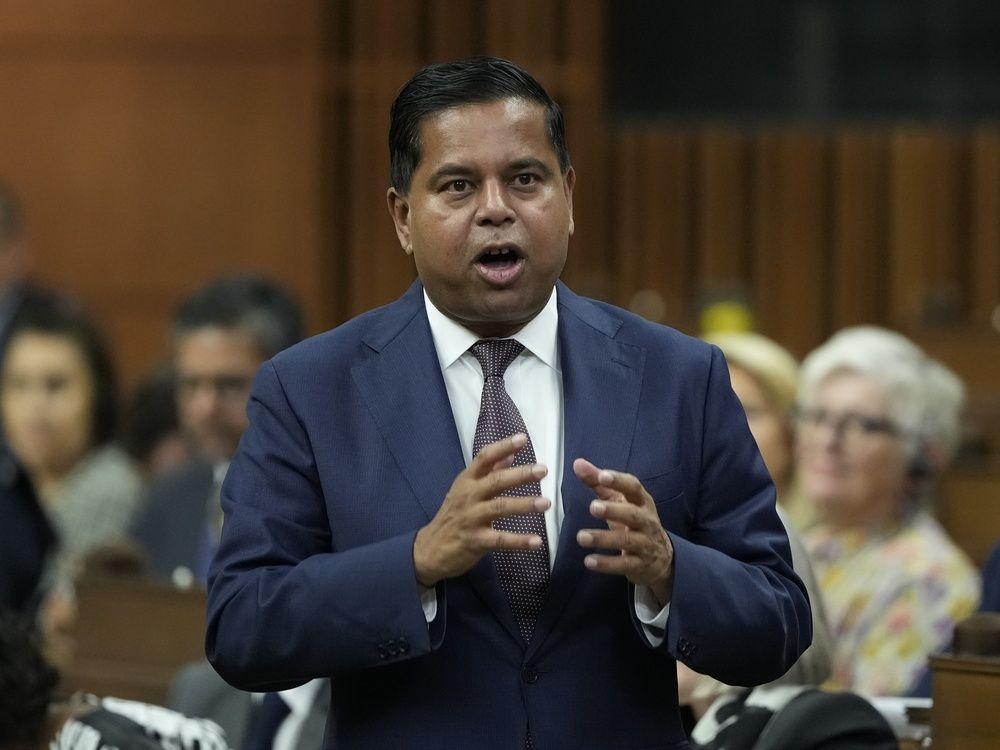
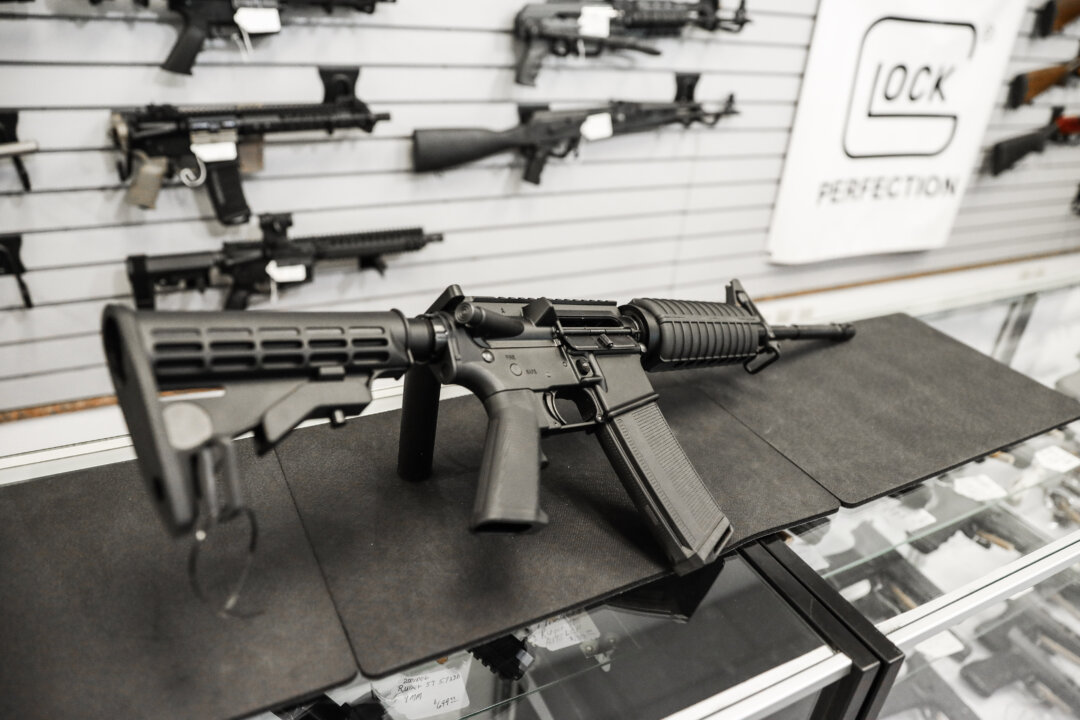
Trudeau promises more gun control and goes on the attack against Scheer

Time for feds to give up on gun confiscation​

Ottawa’s gun buyback is burning millions, failing to collect firearms, and doing nothing to stop violent crime.

Gage Haubrich is the Prairie Director for the Canadian Taxpayers Federation.

There comes a point in almost every Canadian’s life where someone sits you down and tells you that no matter how hard you try, it’s very unlikely that you are going to make it to the NHL.

That same type of tough love needs to be shown to Prime Minister Mark Carney and Public Safety Minister Gary Anandasangre about the chances of successfully following through with Ottawa’s gun ban and confiscation program.

Like a hockey player who can’t skate backwards, it’s never been more obvious that it’s time to throw in the towel. The program is a clear failure, it won’t make Canadians safer, but it will cost taxpayers an untold amount of cash.

After banning more than 2,500 different makes and models of firearms over the last six years, the federal government finally launched its confiscation to collect those guns from individual owners with a six-week pilot project in Cape Breton, Nova Scotia.

The government aimed to confiscate 200 firearms during the project. It only collected 25 from 16 different people.

That’s a clear failure.

And in typical federal government fashion, the lack of results doesn’t mean a lack of spending.

The government agreed to give at least $149,760 to the Cape Breton Regional Municipality to carry out the confiscation. The government also spent $26,535 in compensation to the owners of the banned guns.

That means the cost to taxpayers for each gun confiscated is about $7,000. If this program rolls out across the country, it’s going to get really expensive, really quickly.

Failing government programs often face legitimate criticism for two reasons: they cost taxpayers too much money or they don’t work.

Ottawa’s gun confiscation is a case where both ring true. Taxpayers will be on the hook for potentially billions of dollars to pay for it, and it won’t make Canadians safer.

The first problem is the cost.

The government has committed $742 million to carry out its gun ban and confiscation scheme, according to Budget 2025, but the government has not been transparent about these costs to taxpayers.

The Liberal Party initially said the confiscation would cost $200 million in 2019. The Parliamentary Budget Officer said it will cost up to $756 million to compensate owners for their firearms in 2021. Other experts put the final price tag at about $6 billion.

Taxpayers should be worried about costs ballooning past estimates, because blowing more money than budgeted is a government specialty, especially on gun control programs.

Ottawa initially promised that the long-gun registry would cost taxpayers only $2 million. The final tab was more than $2 billion before it was scrapped.

Despite all those costs, the gun confiscation won’t make Canadians safer. And that’s something that law enforcement experts have been saying since the government announced the policy.

That’s because it’s not legal gun owners committing crimes with firearms. And every dollar that the government wastes on this program is a dollar that can’t be used to stop the real problem of gun smuggling.

The union representing RCMP members says Ottawa’s program “diverts extremely important personnel, resources, and funding away from addressing the more immediate and growing threat of criminal use of illegal firearms.”

“We know that the gun buyback program is going to have, essentially, zero impact on the crime in Toronto,” said Clayton Campbell, the president of the Toronto Police Association.

And examples from other countries prove the point. New Zealand conducted its own confiscation back in 2019 and collected more than 50,000 banned firearms, but violent gun crime increased in the years afterward.

The failure of the Cape Breton project proves Ottawa’s gun confiscation is a waste of money that won’t make Canadians safer. Instead of pushing forward, Ottawa needs to finally stop limping this scheme along and end it once and for all.


BERNARDO: Cape Breton’s confiscation disaster and Quebec’s big payday​

The Cape Breton pilot exposed the truth about gun confiscation — high costs, low results, and zero impact on crime.

You’ve seen this public safety theatre before.

Ottawa announces a grand plan. The media headlines hit. Politicians trot out their slick talking points, and the bill lands on your kitchen table like a wet sandbag.

Then reality shows up.

The Pilot Program That Exposed the Lie

Last fall in Cape Breton, Nova Scotia, Ottawa ran a six-week pilot for its firearms confiscation compensation scheme.

Media reports say 25 firearms were confiscated from 16 participants, even though the government expected to seize 200. One of those participants reportedly was a widow who wanted her late husband’s guns out of the house, so she turned in roughly half the guns herself. Many of those firearms weren’t even on the ban list.

That is not a success. That’s a sinking ship sending up a distress flare.

The cost of this failure is even worse.

Ottawa paid at least $149,760 to administer the pilot program, which works out to roughly $6,000 per gun collected.

That is what happens when policy gets built for political optics instead of measurable public safety outcomes.

The target is wrong. It has always been wrong.

Law abiding, licenced owners are not the source of criminal gun violence.

They are the easiest group to pressure, the safest group to blame, and the most politically convenient group to scapegoat.

That is the Liberal government’s play.

That’s always the Liberal government’s play.

What This Firearms Confiscation Scheme Actually Produces (It’s not safety)

It produces paper pushing for bureaucrats.

It produces delay and uncertainty for licenced owners.

It produces “compliance theatre” for the government and its media cheerleaders.

And it steadily grows contempt for this Liberal government among ordinary Canadians who already follow every rule and regulation.

Meanwhile, the pipelines that feed illegal guns to drug dealers, gang members, and organized crime keep flowing.

Gun smugglers, illegal firearms traffickers, and repeat violent offenders. This is where enforcement is hard, slow, and decidedly unglamorous. Because, unlike licenced firearms owners, violent criminals and gun smugglers and traffickers do not comply with government edicts.

Mark Carney’s firearms confiscation scheme doesn’t even touch that fight.

It ignores the glaring disconnect and insists you are the one with the comprehension problem.

Quebec Steps Up with an Open Hand

Now the contrast gets insulting.

After a pilot program that sputtered to a dismal end, after Ottawa pledged $12.4 million for Quebec to coordinate firearms confiscations from licenced owners, the Quebec government happily hopped on board.

The failed pilot program screamed, “Total failure.”

The government’s response?

“Who cares? Fund it anyway.”

You don’t need a policy degree to see what’s happening.

A political cash infusion gets wrapped in public safety language.

A provincial government gets to posture as “tough on crime.”

The Liberal government gets to claim “progress” on a failed agenda.

And you get another round of bureaucratic harassment aimed at the wrong people.

This is not “CSSA taking a run” at Quebecers.

This is CSSA pointing out to the country that Quebec’s government gladly takes federal money to confiscate firearms from licenced owners, while the criminal supply chain keeps moving, untouched.

The Real Issue: A Decade of Misplaced Focus

If you want safer communities, you don’t start by treating licenced firearms owners as the enemy.

You start where the harm starts.

Border enforcement that actually stops cross border firearms trafficking

Serious penalties for criminals involved in gun smuggling networks.

A relentless focus on violent offenders, not hunters, collectors, and sport shooters.

Resources aimed at the criminals who ignore laws, not the citizens who obey them.

Anything else is lighting stacks of cash on fire and calling it “reasonable and necessary.”

The Belief Flip You Need to Hold the Line

The lie says, “If we remove guns from licenced owners, we reduce violent crime in our communities.”

The truth is colder, cleaner, and simpler: Crime follows criminals. (A shocking revelation to Liberal politicians.)

The government refuses to name the criminal, so it keeps naming you, the man or woman who complied with every rule, every regulation, and every misguided law they could invent.

Don’t get lulled by polite language and glossy political slogans.

Demand clarity.

Demand measurable public safety outcomes.

Demand a strategy that targets the real criminal threats to public safety, instead of this ideologically scripted “public safety theatre” dutifully performed in front of compliant media cameras.


The Liberals are well aware gun-grab is all for show — that's the point​

Twenty-five guns. That’s all the federal government collected in a recent pilot project in Nova Scotia for its new “buyback” (a.k.a. expropriation) program for prohibited firearms. “A total of 25 prohibited firearms, turned in by 16 participants, were destroyed,” spokesperson NoĂ©mie Allard said Friday. “The total compensation paid to pilot participants is $26,535.”

The target was 200 weapons, but that doesn’t faze Public Safety Minister Gary Anandasangaree. “The pilot was never to test the quantitative aspect of the program,” he told reporters Monday. “As an overall pilot, I believe it is successful.”

But what metric should be used, exactly? Are Canadians safer because these 16 people no longer posses these firearms? Will there be fewer carjackings or home invasions in the suburbs of Toronto? Will there be less gang violence in downtown Vancouver? Will this prevent the next mass murder in Portapique?

The answer is: no. And not just because of the low numbers, but because anyone who surrenders their firearm is probably not using it in the first place.

Opponents of the expropriation program say it criminalizes law-abiding gun owners. They claim that most of the 2,500 prohibited firearms are used for recreational hunting or sports purposes. Bad actors who use guns for criminal or other purposes will just ignore the program altogether. They may not be the type who want to be on the government’s radar.

This is probably true. If I owned a Zastava Black Arrow, a Serbian-made precision long-range rifle “intended for disabling armoured vehicles or neutralizing dug-in enemy forces,” currently in use in the Yemeni civil war, would I casually stroll into a Service Canada office and ask for a $9,000 cheque? Not bloody likely.

In other words, this program is all for show. Anandasangaree admitted as much in a leaked conversation with a firearms advocate in September. “Don’t ask me to explain the logic on this to you, OK 
 This is the mandate I was given by (Prime Minister Mark) Carney to complete this 
 and not revisit this.”

But it got worse. The minister then admitted that the program was designed to curry favour with Liberal voters in Quebec. “Quebec is in a different place than other parts of Canada, right? And this is something that (is) very much a big, big, big deal for many of the Quebec electorate that voted for us.”

Quebec has a particular affinity for gun control due to the legacy of the Polytechnique massacre of 1989, in which 14 women were murdered at École Polytechnique de MontrĂ©al. Last week Ottawa struck a $12-million deal with the province to “compensate” it for coordination of the program.

But that’s just the tip of the priceberg. The program boasts a $746-million budget. In its first phase, aimed at businesses, it collected 12,000 prohibited firearms and paid over $22 million in compensation. Now it is targeting individuals. Should fewer guns be surrendered than expected, compensation costs could be lower — but baseline administration costs won’t change, and they are substantial.

There are currently 96 employees working on the program, with room to hire more if necessary, according to the government website. Thirty-nine of these people will be “supported to find positions within Public Safety when the Program sunsets.” Add to that, RCMP officers and local police forces who help collect and destroy firearms, and Employment and Social Development Canada personnel who set up and run a call centre and payment processing system. Oh, and IBM Canada got a contract for over $1 million to design the program back in 2020.

Where do things go from here? The government plans to roll out the buyback in the next few weeks, with an amnesty in force to the end of 2026. Alberta and Saskatchewan are formally opposing the program, daring the federal government to take them to court, and the Ontario Provincial Police is refusing to participate. By any metric, Ottawa is shooting blanks — and should put this boondoggle out of its misery.


With Pilot Project’s Low Turnout, Will Ottawa’s Gun Buyback Deliver?​

As the federal government prepares to expand its gun buyback program nationwide in the coming weeks, gun control groups, lobbyists, and policy experts are questioning whether the low participation in last fall’s pilot program signals challenges for the broader rollout.

The Liberal government’s gun buyback program is expected to be rolled out across the country for individual firearms owners “in the coming weeks,” Public Safety Canada said on Jan. 7, following the release of its six-week pilot program results.

Ottawa launched the initial pilot for the buyback program in Cape Breton, Nova Scotia, in September 2025, in an effort to “test the program’s processes and systems” before launching it nationwide.

While the government said it had intended to collect 200 guns from licensed owners in Cape Breton, Public Safety Canada reported that a total of just 25 firearms were collected during the pilot. A spokesperson for the public safety department told The Epoch Times that those 25 firearms were turned in by 16 participants, who were paid a total of $26,535 in compensation.

Public Safety Minister Gary Anandasangaree told reporters on Jan. 12 that the pilot was “successful” as it had aimed to test the program’s capabilities and it resulted in “a number of issues” being corrected.

“The pilot was never to test the quantitative aspect of the program,” Anandasangaree said. “It [was] much more to look at the systemic issues that may occur.”

The minister said that despite the low turnout for the pilot program in Cape Breton, he believes Ottawa is “well poised to be able to launch the program in the coming weeks.”

Pushback

Tory Opposition Leader Pierre Poilievre has called the buyback program an attempt to take firearms away from “law-abiding” hunters and sports shooters while failing to address illegal firearms most often used in crimes.

Tory MP Frank Caputo, who serves as his party’s public safety critic, has previously called the buyback program “an incredible boondoggle,” and criticized Anandasangaree over his leaked conversation last September in which he expressed doubts about the program.

The provinces of Alberta and Saskatchewan have said they are opposed to the program, and have instructed their police forces not to enforce it, as has the recently elected government in the Yukon. The Ontario Provincial Police has also said it will not take part in the enforcement of the program.

Meanwhile, the British Columbia Association of Police Chiefs has pledged its support for the program, but has also raised concerns about the current case management system not being ready in time to allow for the necessary training or deployment before the amnesty period ends in October, according to a report by the National Post.

Canadian Police Association president Tom Stamatakis told MPs at a House of Commons justice committee meeting in September 2025 that police forces would have challenges enforcing the buyback program due to a lack of resources, and said funding used to facilitate the program could be “more effective” if put to other uses.

National Police Federation president Brian SauvĂ©, who also attended the committee meeting, said the government’s focus should be on stopping illegal gun smuggling if the aim is to reduce crime in Canada.

Despite the pushback from certain provinces and police forces, Anandasangaree told reporters on Jan. 12 that the plan is still to launch the program across the country in the coming weeks.

“The province of Quebec signed on to the program with the SQ [SĂ»retĂ© du QuĂ©bec] just last week. We have the RCMP who [are] ready to do their work. We have a number of other means by which we could collect the firearms that are prohibited,” he said.
The minister announced on Jan. 7 a “financial contribution agreement” that will support the implementation of the buyback program in Quebec. The province has maintained its own firearms registry.

The Epoch Times asked the Quebec public safety minister whether data from the registry will be used to help Ottawa collect banned firearms. A response was not received by publication time.

Was the Pilot a Success?

The buyback program has drawn criticism from both sides of the debate, including gun-control advocates and gun-rights supporters.

Heidi Rathjen, coordinator of PolyRemembers—a gun control group formed after the 1989 École Polytechnique shooting—told The Epoch Times that since the pilot program aimed to ensure the system is effective, it can be called a success.

In terms of the turnout for the pilot program, she said she has concerns about gun lobbyists spreading “disinformation” to discourage gun owners from participating in the buyback and provincial governments from endorsing or contributing to the program.

“The prohibitions in the buyback target a very specific type of weapon, and even once completed, there would still be over, or close to, 20,000 models of firearms that would be available on the market that are legitimate for hunting and target practice,” Rathjen said.

She also noted that gun control groups have been waiting for the launch of the firearms buyback program for nearly six years, as the measures were initially announced under the Trudeau government in 2020. Rathjen said the program was expected to be completed by 2022 at the time, and it was again promised in the last election by Prime Minister Mark Carney.

She also said “one glaring flaw” with the buyback program is that it does not include the SKS firearm. Rathjen also said Canada needs to tighten its limits on magazine size, especially for long guns, to weaken the capability of shooting many people rapidly.

Meanwhile, Tracey Wilson, vice president for public relations at gun advocacy group Canadian Coalition of Firearm Rights, told The Epoch Times that in her view the buyback program is “failing.” She said collecting only 25 firearms in the pilot is “beyond pathetic and clarifies why they took so long to come forward with the numbers.”

She also said she doesn’t expect many Canadians will come forward to turn in their firearms when the program is rolled out nationally, noting that participants are not “guaranteed” compensation.

“Carney needs to listen to law enforcement, take control of the situation now, scrap this gun grab entirely and regain some credibility on the public safety file by refocusing his efforts and resources on crime, violence and gun smuggling,” Wilson said.

Wilson previously told The Epoch Times that Canada’s sports shooting sector is harmed by gun control legislation despite its “long, storied history of marksmanship and Olympic excellence on the world stage.” She said legislation should instead focus on gang violence and illegal gun smuggling by criminal networks.

‘Serious Messaging Errors’

Noah Schwartz, assistant political science professor at the University of the Fraser Valley and firearms policy researcher, told The Epoch Times on Jan. 13 that he suspects the buyback program will have a low turnout like the pilot did, due to resistance from the Western provinces, “messaging failures” by the Liberal government, and “a lack of trust” in the government from Canada’s community of licensed gun owners.

“A low turnout is worse than no ban and buyback at all, as the now valueless firearms could be more likely to end up on the grey or black market,” Schwartz said.

Schwartz said that the government has made “serious messaging errors” regarding the program that have eroded public trust, including when Anandasangaree was caught on tape admitting the program is “politically motivated.”

Additionally, the government has “quietly expanded” the list of banned firearms since 2020, meaning many gun owners may not know they own a prohibited firearm, Schwartz noted.

He said Ottawa’s failure to carry out the program in a “timely manner” has also given time for the program to be exposed to scrutiny. Australia and New Zealand’s buyback programs were carried out within two years from their initial announcement, he added.

Schwartz said his research has indicated it is unlikely a firearms ban or buyback will “meaningfully improve public safety” as most crime in Canada is carried out with illegally smuggled firearms from the United States.

“Handguns are generally preferred by criminals over long guns for their portability and concealability. Since handguns have been tightly controlled in Canada for decades, criminals prefer to smuggle handguns from over the border,” he said.

He also said literature indicates programs like community policy and violence interruption programs “are more cost-effective and achieve better outcomes than gun bans.” Additionally, Schwartz said he has spoken to community workers in his research who said they need “consistent sustained funding to make these programs work.”

Schwartz also referred to polling from the Canadian Taxpayers Federation earlier this year that indicated 55 percent of Canadians said stopping illegal gun smuggling would be the most effective way to reduce gun crime.

Anandasangaree said on Jan. 12 that the issue of gun violence “doesn’t have a simplistic solution,” and the buyback program is “one of several things” the federal government is doing as part of a multi-pronged response to gun violence.

 
Manitoba joins the Yukon, Saskatchewan, Alberta, New Brunswick (Also opposes the use of police for the confiscation, echoing the concerns of the other provinces) and Ontario (Took a more balanced approach initially but later stated it would not participate in enforcing the buyback program, aligning with Alberta's lead) in opposition to the firearms ban program.

2WiQbqw.jpeg
 
When the Globe and Mail editorialists are calling out the buyback program you know its bad....

A pilot for Canada’s gun buyback was a failure. The Liberals are committing anyway​

When an individual falls victim to the sunk cost fallacy, the consequences that follow are generally even worse. Maybe it’s an extra few thousand wasted on a rust bucket of a car just to feel like the money invested in it wasn’t for nothing. Maybe it means staying in a bad relationship that ought to have ended years ago. Maybe it’s why – just to pick a totally random example – a columnist will persist with a snoozer of a column because she’s typed out 500 words already. These are emotional, illogical decisions, but humans are emotional, illogical creatures who often have a hard time reversing course when we feel like we’ve already invested a lot of money, time or attention.

When governments fall victim to the sunk cost fallacy, however, the toll is much higher than a broken-down Nissan blocking traffic. In the infamous case of the Concorde jet debacle, the British and French governments continued pouring hundreds of millions – and eventually billions – over the course of decades into developing the airliner, even after it became clear the project was not economically viable. In the end, the Concorde flew commercially for less than 30 years.

Canada is apparently ready to launch its very own Concorde, having spent nearly six years and close to $100-million ($22-million in compensation for businesses, and at least $67-million in administrative costs) on a national program that hasn’t actually begun yet. Canada’s plan makes even less sense than the Concorde, however, which despite its delays, cost overruns, and technical limitations, at least achieved its goal of getting planes in the air. But Canada’s “Assault-Style Firearms Compensation Program” cannot possibly achieve its assigned goal of making our streets safer, simply because it does not actually target the guns making our streets unsafe.

It’s trite at this point to note that the vast majority of firearms-involved crimes in Canada are committed using illegally obtained guns. Yet this project could spend more than $750-million (which is itself an outdated Parliamentary Budget Officer estimate from 2021) to collect firearms from valid licence-holders, who are not, by and large, the ones committing the crimes. And the program may not be successful in even achieving that.

Back in the fall, the government launched a six-week pilot program to collect the firearms it has classified since 2020 as “prohibited” from licence-holders in Cape Breton, N.S. At the outset, Department of Public Safety officials said they were “confident” that they would collect 200 guns. But when the pilot wrapped up, the department had collected just 25, paying out $26,535 to 16 people, according to reporting by the Toronto Sun.

We can infer based on the government’s initial estimate, then, that roughly 175 prohibited weapons still remain in Cape Breton, which will either need to be handed over or permanently disabled by the time the amnesty period ends on Oct. 30, 2026. The government has not said how it will verify that prohibited weapons that remain in the community will be disabled by that date, an endeavour that will likely be far more complicated than anticipated if buyback numbers nationally are as lacklustre as they were in Cape Breton.

Public Safety Minister Gary Anandasangaree nevertheless defended the program on Monday, saying, “As an overall pilot, I believe it was successful,” which is sort of like watching your car drag its muffler across the asphalt and saying it just needs a spot of paint. “When we roll out the program in its full form in the upcoming weeks, we do anticipate much greater uptake,” he said.

It is unclear on what grounds Mr. Anandasangaree believes a national program will be more successful, especially when it doesn’t even have sign-on from all the provinces (and, in the case of Alberta, when the Premier has taken steps to resist it.) But again, even if the buyback achieves its target number of confiscated weapons (which the government has also not disclosed), it is likely to have little to no effect on crime rates.

Indeed, the Liberals are trudging ahead with a program that has wasted, and will continue to waste, hundreds of millions of taxpayer dollars confiscating the weapons that aren’t used in crimes, and following a failed pilot project because 
 it’s politically popular in Quebec? Because we’ve already invested $100-million, and it would look bad to walk away now? Because he’s agreed to go to therapy and promises that this time, he’ll really change?

To the extent there was ever logic to this gun buyback project in the first place, there is zero reason to continue with this wasteful charade now. But then, we humans are emotional and illogical – and apparently, so too is this government.

Robyn Urback


While the tone is correct, there are several mistakes in the article.
CCFR had an estimate of around 2000 assault-style firearms lawfully held in the Cape Breton area.
200 was the intended pilot buyback cap/max.
Actual program cost estimates range up to 6 Billion.
 
Well I don't own a gun, never have and probably won't in future. I do enjoy going shooting with my son and his buddies. Guns are tools to be used for hunting, target shooting, and safe entertainment. Despite the fact I do not own a gun, I fully support responsible gun owners and reject the ideologically driven Liberal attack on legitimate gun owners - nothing in these gun buy back or restriction programs will make any difference on getting illegal guns off the streets - criminals don't register guns, they get illegal and untraceable ones. This is nothing but a waste of hard earned tax dollars to project idealism on the Canadian public. We need to redirect tax dollars into attacking our national debt, not wasting it on guns.
 

Details of federal firearm buyback program to be announced Saturday​

OTTAWA — The Liberal government plans to announce details of its national program to compensate owners of banned firearms at a briefing in Montreal on Saturday.

Public Safety Minister Gary Anandasangaree, Québec Public Security Minister Ian LafreniÚre and police representatives are set to take part.

Liberal MP and secretary of state for nature Nathalie Provost, who was shot by a gunman during a 1989 rampage, is also expected to be at the announcement.

Since May 2020, Ottawa has outlawed about 2,500 types of guns on the basis they belong only on the battlefield.

The federal government says the national buyback program, which could cost more than $700 million, will provide owners fair compensation for outlawed firearms.

Gun control advocates generally applaud the initiative, while Conservative MPs and some gun owners call it a wasteful plan that targets law-abiding citizens.

This report by The Canadian Press was first published Jan. 16, 2026.


Government of Canada to hold a technical briefing and press conference on the Assault-Style Firearms Compensation Program​

From: Public Safety Canada

Media advisory

Ottawa, Ontario – Members of the media are invited to join the Honourable Gary Anandasangaree, Minister of Public Safety, the Honourable Nathalie Provost, Secretary of State (Nature), and Ian LafreniĂšre, QuĂ©bec Minister of Public Security; Minister Responsible for Relations with the First Nations and the Inuit, and Minister Responsible for Nord-du-QuĂ©bec Region, for a press conference on the Assault-Style Firearms Compensation Program. They will be joined by law enforcement officials.

Prior to the press conference, Government of Canada officials will host an embargoed media technical briefing. Journalists will have the opportunity to ask questions to officials attending in a not for attribution capacity.

1. Media Technical Briefing
Event: Virtual
Date: Saturday, January 17, 2026
Time: 10:45 a.m. (EST)

Note for media:
Participation in the technical briefing is for accredited members of the Press Gallery only. Media who are not members of the Press Gallery may contact pressres2@parl.gc.ca for temporary access.

2. Press Conference
Event: In-person
Date: Saturday, January 17, 2026
Time: 1:00 p.m. (EST)

Location:
RCMP Eastern Region Headquarters
4225 Dorchester Blvd
Westmount QC


Liberals Still Clueless on How to Execute Firearm Confiscations​

TheGunBlog.ca — Canada’s Liberal Party-led administration said today that gun owners targeted by its mass confiscations will soon be able to register the goods they want seized and destroyed.

Unworkable, Unenforceable

The Liberals were unable to provide any specifics on how they plan to execute their failing confiscation fantasy when questioned during a “technical briefing” to media including TheGunBlog.ca.

They couldn’t say how they will enforce the seizures, given that they mostly don’t know who owns the rifles and shotguns they’re after.

They couldn’t say how they will enforce seizures against individuals who oppose them.

They couldn’t say how they will execute a program that is opposed by most provinces.

They couldn’t say if confiscation agents will visit homes, or if police will be involved.

They reiterated their idea of “mobile-collection units,” without providing details.

Confiscation Without Compensation

The Liberals repeated that government-licensed gun owners who do register their rifles and shotguns for confiscation may be denied any compensation.

“Declarations will be processed primarily on a first come first served basis, aligned with the availability of funds,” the Department of Public Safety, which is overseeing the crackdown, said today in a statement.

Most Provinces Oppose Confiscations

Quebec is the only province to say publicly that it supports the attacks unleashed by the Liberals in May 2020.

Alberta, Manitoba, Ontario, New Brunswick, Nova Scotia, Ontario, and Yukon have said they won’t participate, or are actively working to block the attacks.

Winnipeg, Halifax, and Cape Breton are the only municipalities whose police have said they will support the seizures.

 
Just received an email from CCFR:

BREAKING Public Safety Confirms Gun Confiscation Program, Nationwide Rollout Begins Monday

Public Safety Canada has announced that the "voluntary" gun confiscation program for individual gun owners will start this Monday, January 19th, 2026.

Here is a summary of the information from the press conference today:

The voluntary declaration period will begin on Monday Jan 19th.

Firearm owners will be contacted by the National Firearms Centre by email or letter beginning Monday with info on participating.

Declaration period will end on March 31st, 2026.

Declaration can be submitted by online portal or by mail.

Declaring your firearms WILL NOT GUARANTEE COMPENSATION.

First come, first served basis for compensation.

"Voluntary" but those who do not participate will not receive compensation and will have to dispose of prohibited firearms by deactivating, exporting or turning in to police before amnesty period ends (current expiry is 30 Oct 2025).

"The deadlines are real. Please heed them."

Program will be reopening for businesses as well "later this winter".

All affected firearm owners or businesses will have to comply with the law by the end of the amnesty period, to avoid criminal liability for the illegal possession of a prohibited firearm.

Alberta and Saskatchewan have added "legal impediments" to participating in the program.

The government does not want people to use money from surrendered firearms to "buy an SKS" (they're not likely going to give you any money regardless)".

Minister Anandasangaree Unveils Details of Gun Buyback Program​

At RCMP headquarters in Montreal, Public Safety Minister Gary Anandasangaree, accompanied by Secretary of State Nathalie Provost and Quebec Public Safety Minister Ian LafreniÚre, announces details of the national buyback program for prohibited firearms, aimed at compensating owners of approximately 2,500 types of firearms banned since 2020. Ottawa maintains that the plan, which has a budget of up to $740 million, will provide fair compensation, despite criticism from Conservative MPs and gun owners. Quebec is the first province to participate in the program. Minister LafreniÚre emphasizes that the Sûreté du Québec (SQ) will oversee its implementation. Minister Anandasangaree is also accompanied by police representatives.

Full Press Release Here: https://www.cpac.ca/headline-politi...ogram?id=ea8191a2-b93c-4643-92ff-0ba919f73c23
 

Liberals Outline Complex and Confusing Gun Confiscations Without Details or Deadlines​

TheGunBlog.ca — Canada’s Liberal Party-led administration yesterday outlined the dizzying steps it’s hoping to put in place to salvage a failing confiscation fantasy targeting government-licensed firearm owners.


Details in the link...
 
Back
Top