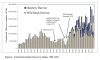
Most of the sockeye are wild. But for Alaska's total harvest "They estimate that 48% of the commercial salmon catch in Alaska is hatchery fish."Are these returns all the product of salmon ranching? If so how is this abundance impacting the food chain for wild fish? What implications does it have on other areas?
Alaska releases around 50M sockeye smolts every year. Only a portion of the sockeye released are marked (otolith marked) but it is estimated that hatchery sockeye account for a 5% of the overall sockeye harvest. For comparison, about 65% of the chum harvest, 42% of the pink harvest, 23% of the coho harvest and 18% of the chinook harvest in AK are hatchery origin. Since pinks and chum make up the VAST majority of salmon planted by AK hatcheries (850million pinks and 650million chum), it's those fish that have the biggest impact on the other species. That's the point I was trying to make in this post - https://www.sportfishingbc.com/forum/index.php?threads/low-holing-by-alaskas-salmon-ranchers.75446/. The modeling in the paper I referenced in that post shows that the entirety of the decrease in Frazier river sockeye can be accounted for by a model that takes the impact of Alaska pink hatchery salmon into account. Since pinks compete with sockeye for similar food sources pinks directly affect the amount of sockeye that share the feeding grounds. Pink salmon are particularly interesting to model since in addition to the steady increase in numbers due to the AK hatcheries, there's the natural every other year cycle that provides a oscillating signal to model - e.g. if pinks cause a decrease in sockeye, the decrease should be larger in alternate years and the magnitude of this alternate year difference should be roughly concordant with the magnitude of the decrease caused by the annual increase in AK hatcheries. That's just what the paper I referenced in the link above showed.Are these returns all the product of salmon ranching? If so how is this abundance impacting the food chain for wild fish? What implications does it have on other areas?

That seems likely. Note the the Alaska salmon harvest has been increasing over the last 50 years while it has been decreasing nearly everywhere else. It would appear the net effect of Alaska hatcheries is to shift the harvest north.So...if all salmon stocks came back to historic levels then we would have a feed shortage?