Lithium cranking batteries. Who is running what?

macro

Well-Known Member
Last go around, I built my own batteries. Weakness on most seems to be the BMS.
Does anyone have a recommendation on cranking batteries?

Contenders seem to be wattcycle. 100ah.. $$$
Litime 165ah heavy.

Vevor, out of stock, no track record.

I went to lithiums to save transom weight so don't want to go back to a 45lb battery, lithiumn or otherwise.

So.. who's running what?
 
Are there any issues for your alternator going direct to lithium? I am considering a house lithium and I believe I need to keep the starting with lead chemistry and use a b to b charger for the lithium. Am I over thinking it?
 
Are there any issues for your alternator going direct to lithium? I am considering a house lithium and I believe I need to keep the starting with lead chemistry and use a b to b charger for the lithium. Am I over thinking it?
Dont mix chemistry's.... if your going to stay lead for cranking.. then a dc dc charger is easiest. Lead floats at a lower voltage than lithium, so if you have both connected, the lead would always be trying to drag down the lithium.

Lithium will charge faster than lead, so if you have a near dead lithium, it will pull a lot of amps until charged, and if the alternator cant handle that.. then issues.... in the case of my old mercury 75 4 stroke, it puts out 14 volts and the batteries get charged to that... worked well enough.
 
Ive got 7 first gen Renogys that I had to crack the cases to rebuild and add new balance circuits to.... and 1 current one that shipped dead due to a balance wiring being severed when built at factory. I hope you've had better luck with renogy than my work did.
not sure about first gen but the one i have linked is excellent. no issues. well over a year in the boat and hitting nearly 2 years now.
only lithium battery i had problems with is relion where the stuff leaked out from the terminals.
edit: looks like they fixed it in the new ones with a bypass circuit - https://www.renogy.com/blogs/learn-center/lithium-battery-balancing
 
Last edited:
Are there any issues for your alternator going direct to lithium? I am considering a house lithium and I believe I need to keep the starting with lead chemistry and use a b to b charger for the lithium. Am I over thinking it?
no. you can go direct to lithium all you want. the issue is when the BMS terminates output it destroys the alternator. so you need to hook up an APD between the alternator terminals - either get this one https://www.sterling-power-usa.com/SterlingPower12voltalternatorprotectiondevice.aspx or this one https://balmar.net/product/apm-12/
it will work fine after that.
dont mix chemistries. it just causes more headaches.
 
not sure about first gen but the one i have linked is excellent. no issues. well over a year in the boat and hitting nearly 2 years now.
only lithium battery i had problems with is relion where the stuff leaked out from the terminals.
edit: looks like they fixed it in the new ones with a bypass circuit - https://www.renogy.com/blogs/learn-center/lithium-battery-balancing
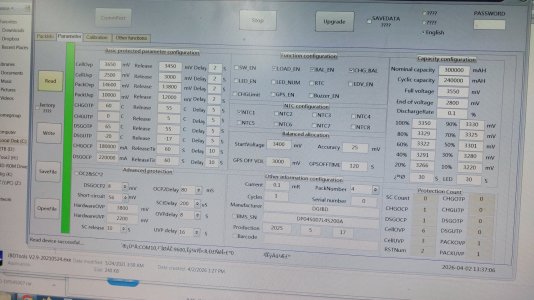
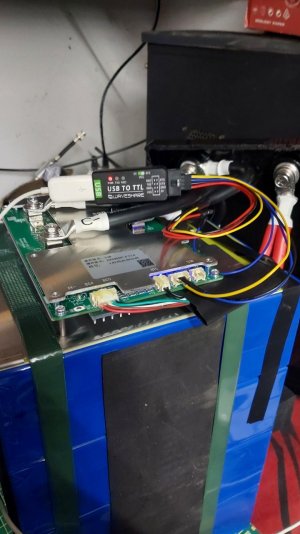
If only I was one of those annoying youtube guys... I could probably make a buck or two. Your looking at a deconstructed /repaired renogy core battery and the associated bms settings. Their quality control is garbage, but they have been sticking to their warranties and replacing as issues arrise
 

Attachments

  • 20260402_133710.jpg
    20260402_133710.jpg
    401.9 KB · Views: 14
  • 20260402_133703.jpg
    20260402_133703.jpg
    129.1 KB · Views: 14
If only I was one of those annoying youtube guys... I could probably make a buck or two. Your looking at a deconstructed /repaired renogy core battery and the associated bms settings. Their quality control is garbage, but they have been sticking to their warranties and replacing as issues arrise
fair enough. ive never tried one of their core/gen 1 batteries. do you have any experience with failures on the smart batteries/gen 2 ? or solids/gen 3 ?
also the parameters seem ok - what is wrong with them ?
cell overprotection 3.65V, release 3.45V
3.4V balancing as it tops up.
cell underpotection 2.5V with 3V release.
300Ah size with 240Ah cycle capacity
3.55V-2.8V with max 0.1% discharge rate.
all seem fairly conservative. i can see the argument the gen 2 shunt would be better for auto balancing though.
 
Last edited:
Back
Top